Cart
0
A collagen tub can look clean on the shelf and still leave the most important questions unanswered. Where did it come from? Is it genuinely halal? Does the label match what is inside? Choosing third party tested halal collagen is about getting clearer answers before you make a supplement part of your hair, skin, and wellness routine.
For Muslim consumers, halal compliance is not a bonus feature. It is the starting point. But certification and independent testing serve different purposes. A halal certificate helps verify that sourcing and production meet Islamic dietary requirements. Third-party testing adds another layer of confidence by checking quality-related details beyond marketing language.
What Third-Party Testing Means for Halal Collagen
Third-party testing means a product is evaluated by an independent laboratory rather than relying only on a brand's internal checks. Depending on the test and the product, a lab may assess identity, purity, microbiological quality, heavy metals, or whether the formula aligns with its stated specifications.
That distinction matters because collagen is an animal-derived ingredient. You deserve transparency around the bovine source, the manufacturing process, and the quality controls used before the powder reaches your kitchen counter.
Testing is not a replacement for halal certification. A laboratory can test a sample for specific quality markers, but it does not issue a religious ruling or trace every part of a supply chain for halal compliance. The strongest standard is both: credible halal certification for faith alignment and independent quality testing for added reassurance.
Why Halal Certification Still Comes First
Bovine collagen begins with cattle-derived raw material, so the source and processing pathway matter. A halal-certified product should have oversight that considers the ingredients, slaughter requirements where applicable, handling, production environment, and potential cross-contact risks.
Be careful with vague phrases such as “halal friendly,” “suitable for halal diets,” or “made with beef collagen” when there is no clear certification information. Those phrases may sound reassuring, but they are not equivalent to a recognized halal certification process.
For a daily supplement, the simplest choice is often the best one: halal-certified bovine collagen with a short ingredient list and straightforward product information. If you cannot quickly understand what the powder is, where it comes from, or why it belongs in your routine, pause before buying.
A clean label reduces unnecessary questions
Unflavored collagen is popular for a reason. It can fit into coffee, tea, smoothies, oatmeal, soups, or water without forcing you into a sweet flavor profile or a long list of extras. For many households, a plain powder is also easier to use consistently because it works with routines already in place.
Look for a formula without added sugar, dairy, gluten, artificial flavors, or unnecessary fillers if those ingredients do not serve your needs. A shorter label does not automatically make a product better, but it makes it easier to assess what you are taking every day.
What to Look for on a Third Party Tested Halal Collagen Label
You do not need a degree in supplement science to shop carefully. Start with the information a confident brand is prepared to share. A trustworthy collagen product should make its core details easy to find rather than hiding them behind broad wellness promises.
Check these four areas before you add a collagen powder to your cart:
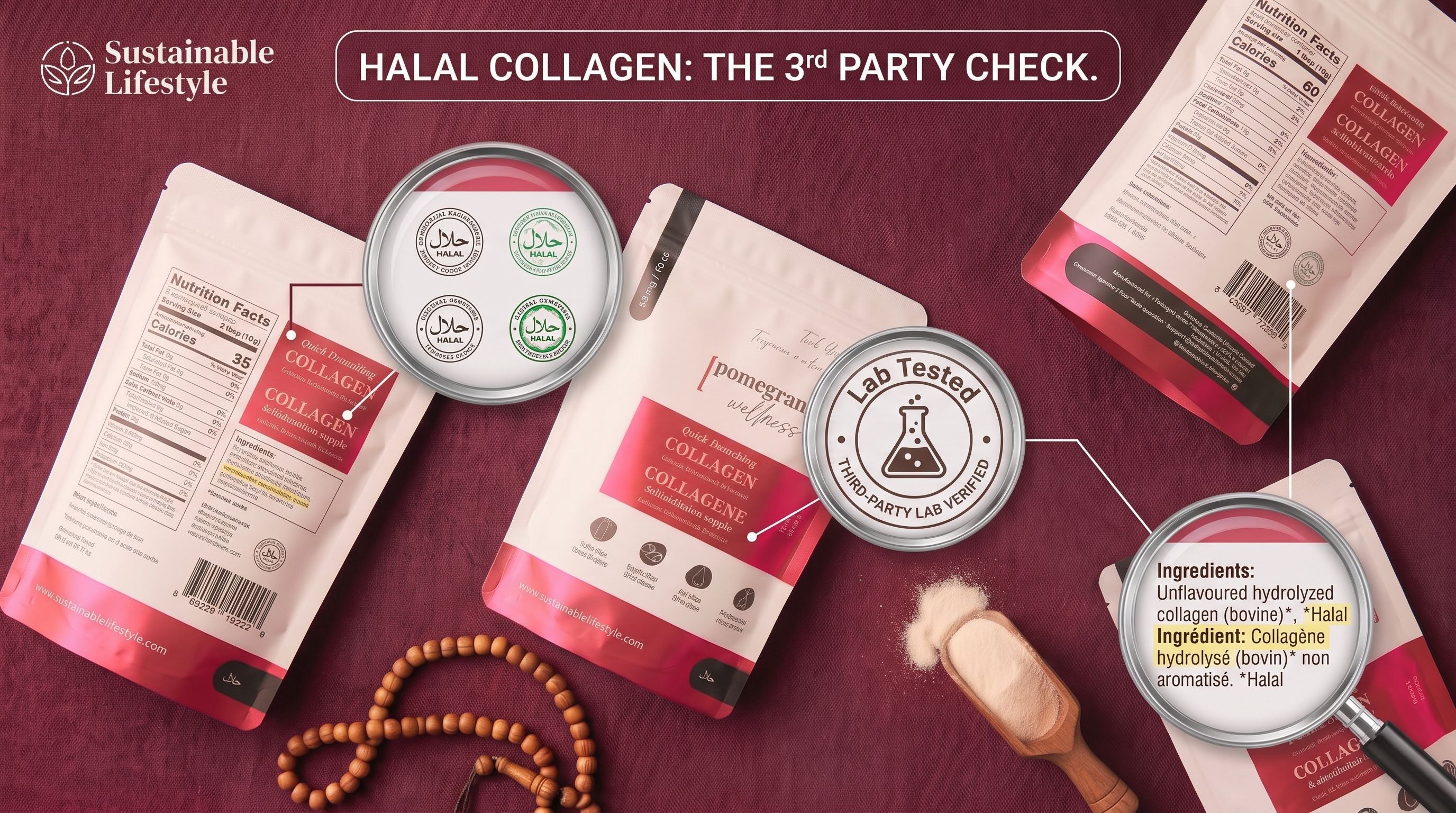
- Halal status: Look for clear halal certification, not only a general claim that the product is appropriate for Muslims.
- Ingredient transparency: Confirm that the collagen source is bovine and review every listed ingredient, especially flavors, sweeteners, and blends.
- Independent testing: Look for a specific statement about third-party testing or quality testing. If you have questions, ask what the testing covers.
- Daily value: Compare serving size, servings per container, and cost per serving instead of choosing based only on the price of the tub.
Ask Better Questions About Testing
“Third-party tested” is a positive signal, but it is not a magic phrase. Different labs can test for different things, and testing a finished product is different from testing every raw material. The most useful approach is to treat testing as one part of a larger trust picture.
Ask what the brand means when it says independently tested. Does it refer to purity? Microbial screening? Heavy metal testing? Ingredient identity? There is no single test that answers every quality question, so a thoughtful brand should be able to explain its standards in plain language.
It also depends on your personal priorities. Someone choosing collagen primarily for a simple beauty-from-within routine may prioritize a clean, unflavored formula that is easy to take daily. Someone with dietary sensitivities may look more closely at allergen statements and every added ingredient. Someone buying for a family may care most about value packs and whether the product can be mixed into familiar foods and drinks.
The right product does not need flashy packaging or exaggerated promises. It needs to make sense for your faith, your routine, and your standards.
Collagen Benefits: Keep Expectations Practical
Collagen is widely used to support a beauty and wellness routine, particularly by people focused on hair, skin, nails, and daily protein intake. It is not a shortcut around sleep, nutrition, hydration, stress management, or medical care. Results can vary based on consistency, overall diet, age, health status, and individual needs.
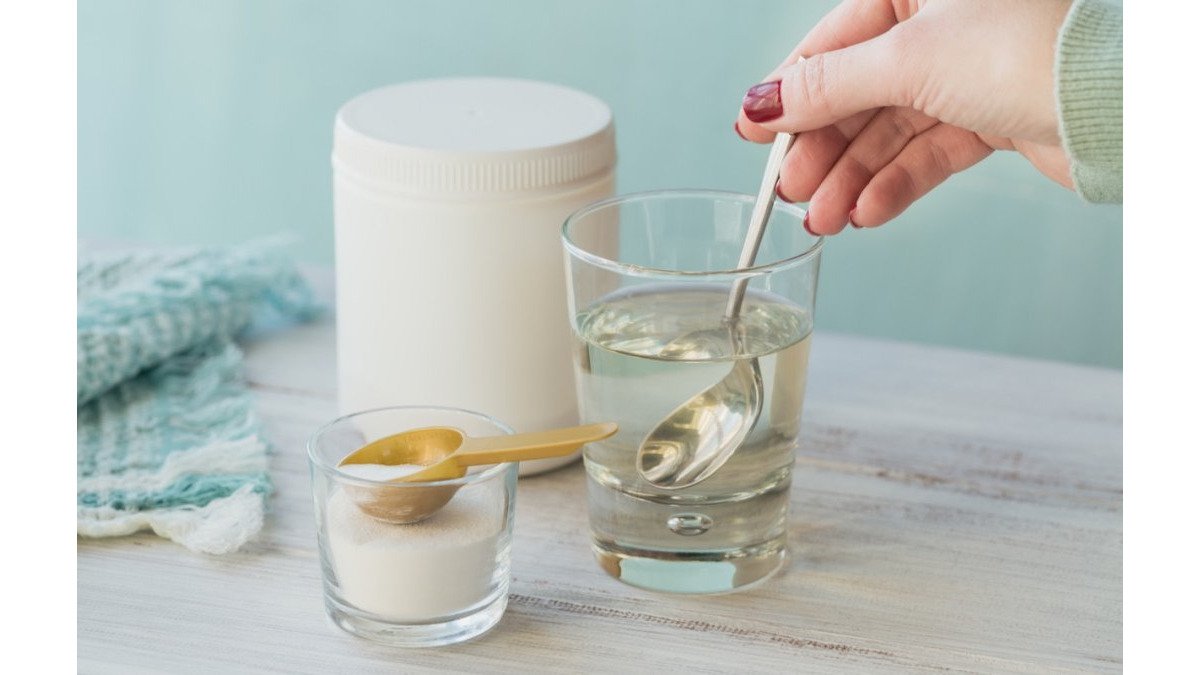
A practical routine is more useful than an overly complicated one. Choose a serving time you can repeat, whether that is stirred into morning coffee, blended into a smoothie, or mixed into an evening drink. Unflavored bovine collagen is especially convenient because it can work in hot or cold liquids without asking you to overhaul your meals.
If you are pregnant, nursing, managing a medical condition, or taking medication, speak with a qualified health professional before starting a new supplement. And if you have a beef allergy or sensitivity, bovine collagen may not be the right choice for you.
Convenience Helps You Stay Consistent
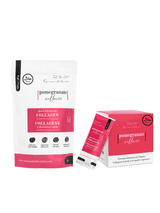
The best collagen powder is not the one that sits unopened in a cabinet. It is the one you can genuinely use. Large pouches can be a smart choice for at-home routines and better per-serving value, while single-serve sachets are useful for work, travel, gym bags, and busy days.
That is why format matters as much as flavor. A clean formula can be excellent, but it still has to fit real life. If you regularly skip breakfast, a sachet in your bag may be more useful than a large container at home. If several people in your household use collagen, a larger format may make more financial sense.
Sustainable Lifestyle focuses on halal-certified, grass-fed bovine collagen made for this kind of everyday use: unflavored, GMO-free, and free from sugar, dairy, gluten, and unnecessary fillers. The goal is simple - give Muslim consumers a clean option that supports their wellness habits without requiring compromise on halal standards.
Choose Confidence Over Assumptions
Supplements are personal. You are putting them into your body repeatedly, often with the hope of supporting goals that matter to you, from healthier-looking hair to a more consistent self-care routine. That is too important to leave to assumptions based on a trendy label or a vague claim.
Choose a collagen product that is clear about halal certification, transparent about ingredients, and backed by meaningful quality practices. When third-party testing is paired with genuine halal oversight and a formula you can use every day, your collagen routine starts from a place of confidence rather than uncertainty.