Cart
0
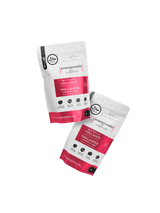
Table of Contents
- What Halal Collagen Purity and Third-Party Testing Actually Mean
- Halal Collagen Certification: Religious Compliance vs. Purity Testing
- Third-Party Tested Collagen: What Independent Labs Actually Verify
- Collagen Certificate of Analysis: What It Should Contain
- Grass-Fed Bovine Collagen: Sourcing and Supply Chain Transparency
- Comparing Halal Collagen Brands: Purity, Testing, and Transparency
- How to Verify Halal Collagen Claims Before You Buy
- Frequently Asked Questions
Last Updated: October 17, 2026
What Halal Collagen Purity and Third-Party Testing Actually Mean
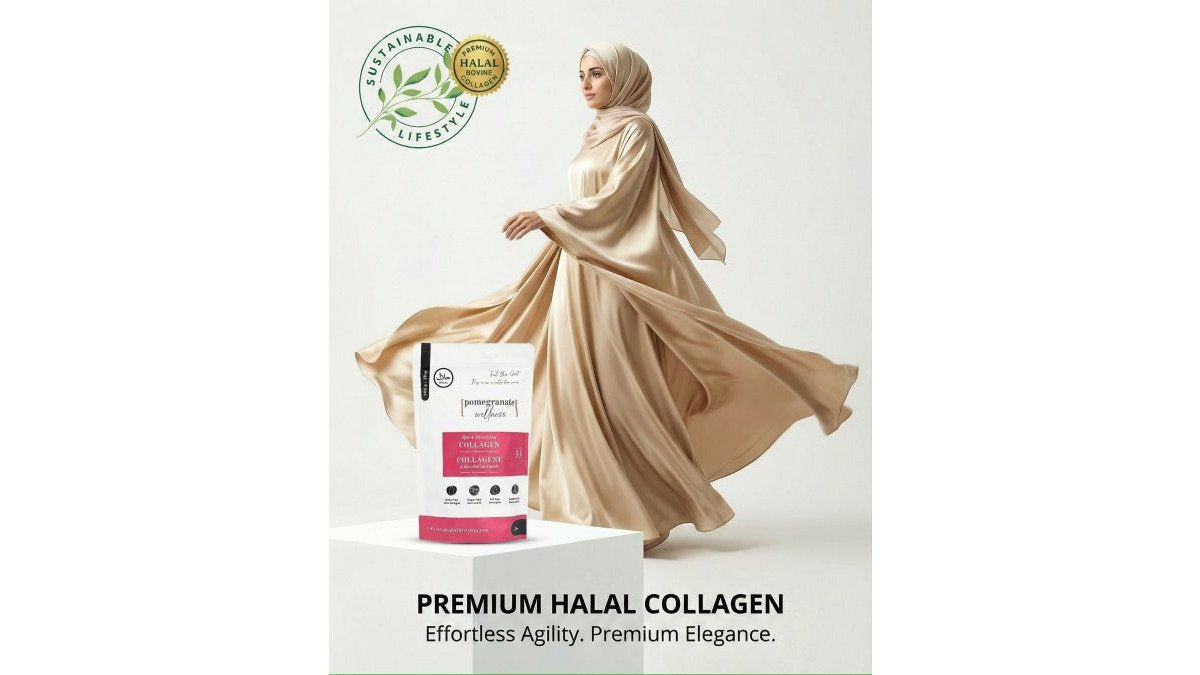
When Muslim consumers evaluate halal collagen purity testing, they're asking two distinct questions: Is this product compliant with Islamic dietary law? And is it actually pure, free from contaminants and what the label claims? These aren't the same thing. Sustainable Lifestyle addresses both by offering Halal-certified bovine collagen that comes from grass-fed, pasture-raised cattle with transparent sourcing practices.

Halal collagen purity testing refers to independent laboratory verification that confirms the product contains what it claims and nothing harmful. A Halal-certified collagen meets Islamic compliance standards. But certification alone doesn't prove purity. Understanding the difference between these two verification types helps buyers make confident choices about which brands deliver genuine quality.
Pro Tip
Many Muslim consumers assume that Halal certification automatically means a product is pure and contaminant-free. That's a common misconception. Halal status and purity are verified through separate processes by different bodies.
The marketplace now includes brands making various claims about testing and certification. Some highlight religious compliance. Others emphasize laboratory verification. The strongest brands, like Sustainable Lifestyle, combine both. This guide breaks down what each verification actually proves, what to look for in testing documentation, and how to compare brands fairly.
Halal Collagen Certification: Religious Compliance vs. Purity Testing
Halal certification confirms that a product meets Islamic dietary standards. It verifies sourcing, processing, and ingredients against Islamic law. Purity testing, by contrast, is a laboratory function that screens for contaminants, verifies amino acid profiles, and confirms potency. One brand can be Halal-certified and impure. Another can be pure but lack religious certification. The best collagen supplements pass both standards.
How Halal Certification Works
Halal-certified collagen comes from cattle raised and slaughtered according to Islamic law. A certification body reviews the entire supply chain: animal sourcing, slaughter methods, processing facilities, and ingredient sourcing. For bovine collagen, the certifier confirms that the cattle were raised humanely, slaughtered by a trained Muslim handler, and processed without haram (forbidden) substances like alcohol or non-halal gelatin.
Organizations like the Halal Certification Board evaluate documentation from suppliers and manufacturers. They may conduct site visits to verify compliance. Once approved, a brand receives a Halal certificate valid for a set period, typically one to three years, and must renew it after inspection.
Sustainable Lifestyle holds Halal certification, meaning its bovine collagen meets these Islamic standards. The brand sources from grass-fed, pasture-raised cattle and maintains transparent documentation of its supply chain from ranch to finished product.
Why Halal Status Doesn't Guarantee Purity
A Halal-certified product is compliant with Islamic law but not necessarily free from contaminants. Certification bodies focus on compliance, not laboratory purity testing. A certified collagen could contain heavy metals, microbiological contamination, or lower amino acid levels than claimed, and still hold a valid Halal certificate.
This gap exists because Halal certification and purity testing serve different purposes. Certification verifies process and source. Testing verifies chemistry and safety. A brand might be perfectly Halal but use lower-grade raw materials, experience processing contamination, or store finished products in conditions that degrade quality.
That's why buyers should look for brands that pursue both certifications independently. Sustainable Lifestyle combines Halal certification with sourcing transparency, using grass-fed bovine sources and clean processing methods designed to minimize contamination risk from the start.
Third-Party Tested Collagen: What Independent Labs Actually Verify
Third-party testing means an independent laboratory, not the manufacturer, analyzes the product. Labs screen for potency, purity, and safety. They test for heavy metals, microbiological contaminants, and verify that the collagen peptide content matches the label claim.
A certificate of analysis (COA) from a third-party lab documents these findings. It shows what was tested, the methods used, and the results. Buyers who request and review a COA gain concrete evidence of what they're purchasing.
Common Contaminants Labs Screen For
Independent laboratories typically test for heavy metals including lead, cadmium, and mercury. These accumulate in animal tissues over time. Grass-fed cattle generally have lower exposure than grain-fed animals raised near industrial areas, but testing confirms actual levels rather than relying on sourcing assumptions.
Labs also screen for microbiological contaminants: bacteria, yeast, and mold that could indicate poor storage, handling, or processing. Collagen peptides are hydrolyzed protein, which means they've been broken down into smaller molecules. This process increases surface area and can make the product more vulnerable to microbial growth if storage conditions aren't controlled.
Potency testing verifies amino acid profiles. Collagen contains specific amino acids, glycine, proline, and hydroxyproline, in predictable ratios. If a product claims to contain 10 grams of collagen peptides per serving, the lab confirms that amount is actually present.
How to Read Testing Results
A certificate of analysis lists the test methods used. Look for recognized standards like HPLC (high-performance liquid chromatography) for amino acid analysis or ICP-MS (inductively coupled plasma mass spectrometry) for heavy metal screening. These methods are industry standards and provide reliable results.
The COA should show detection limits, the lowest concentration the lab can reliably measure. If a test shows "lead: <0.1 ppm" (parts per million), that means lead was either absent or below 0.1 ppm, which is the lab's detection limit. A lower detection limit provides more confidence.
Dates matter. A COA from the current year is more relevant than one from two years ago, especially for products stored in variable conditions. Reputable brands test regularly and update documentation.
Collagen Certificate of Analysis: What It Should Contain
A certificate of analysis is the single document that separates a verified purity claim from a marketing claim. Most brands mention testing; far fewer publish a COA a buyer can actually read. This section covers what a complete COA contains, which fields matter most, and how to spot a document that looks official but proves very little.
The Fields a Complete COA Must Show
A credible COA is lot-specific, not product-generic. It should identify the exact batch it covers, because testing one lot tells you nothing about the pouch in your cupboard. Look for these fields:
- Product name and lot or batch number, the lot code on the COA should match the code printed on your packaging.
- Manufacturing and expiry dates, establishes which production run was tested.
- Testing date, a COA dated within the last twelve months is far more useful than one from two or three years ago, particularly for a hydrolyzed protein stored in variable conditions.
- Laboratory name, address, and accreditation, the lab must be identifiable and independent of the manufacturer.
- Test parameters and methods, each test should name the method used, not just the result.
- Results with units, mg/kg, ppm, CFU/g, or g/100 g, so the number can be interpreted.
- Specification or limit, the pass/fail threshold the result is measured against.
- Authorized signature or reviewer, a COA without a named approver is a template, not a record.
Accreditation: What ISO/IEC 17025 Actually Tells You
Many labs state ISO/IEC 17025 accreditation. This is an international standard for the competence of testing and calibration laboratories, and it is the benchmark most supplement quality teams look for. Accreditation means the lab's methods, equipment, and personnel have been assessed against a recognized standard, it does not mean every result is correct, but it does mean the lab operates under external oversight.
A practical check: accreditation is usually scoped to specific tests. A lab accredited for heavy-metal analysis by ICP-MS may not be accredited for microbiological screening. Ask whether the accreditation scope covers the tests on the COA you are reading, not just whether the lab holds a certificate.
Reading Test Methods and Detection Limits
The method name on a COA tells you how sensitive and specific the test is. Common methods you will see:
- ICP-MS (inductively coupled plasma mass spectrometry) for heavy metals such as lead, cadmium, arsenic, and mercury. It is sensitive to very low concentrations, which is why it is the usual choice for trace-element screening.
- HPLC (high-performance liquid chromatography) for amino acid profiling and potency verification.
- AOAC or equivalent microbiological methods for total aerobic count, yeast and mold, and specific pathogens.
Detection limits matter as much as results. A COA that reports "lead: not detected" is only meaningful if it also states the limit of detection. A result of "below 0.1 ppm" with a stated detection limit of 0.1 ppm tells you the lab could not see lead above that level, it does not prove the product is lead-free. A lower detection limit gives more confidence. When two brands both claim "heavy metals tested," compare the detection limits before comparing the claims.
Red Flags in a COA
A document that looks like a COA can still be weak evidence. Watch for these patterns:
Starter Pouch : Unflavoured Halal Collagen Powder 10oz (284g) →
- No lot number, or a lot number that does not match the packaging.
- Results with no units and no specification limit, so the reader cannot tell whether a number is high or low.
- A testing date older than the current production run.
- A lab that cannot be found independently, or that shares an address with the manufacturer.
- A COA that covers only one parameter, such as potency, while the brand's marketing claims broad purity testing.
- A summary sheet or "certificate of compliance" presented in place of raw analytical results.
Watch Out
A COA is only as good as its traceability. If the lot number on the document does not match the lot number on your package, the results do not apply to the product you bought, regardless of how official the document looks.
How to Request and Verify a COA
Ask the brand for the COA for the specific lot you received, not a sample document. A brand confident in its testing can usually supply this within a few business days. Once you have it, verify the lab independently, search the lab name and check whether its accreditation is current and covers the tests listed. Cross-check the lot code against your packaging. If a brand cannot supply a lot-specific COA, treat the testing claim as unverified rather than disproven, and weigh it accordingly against brands that can.
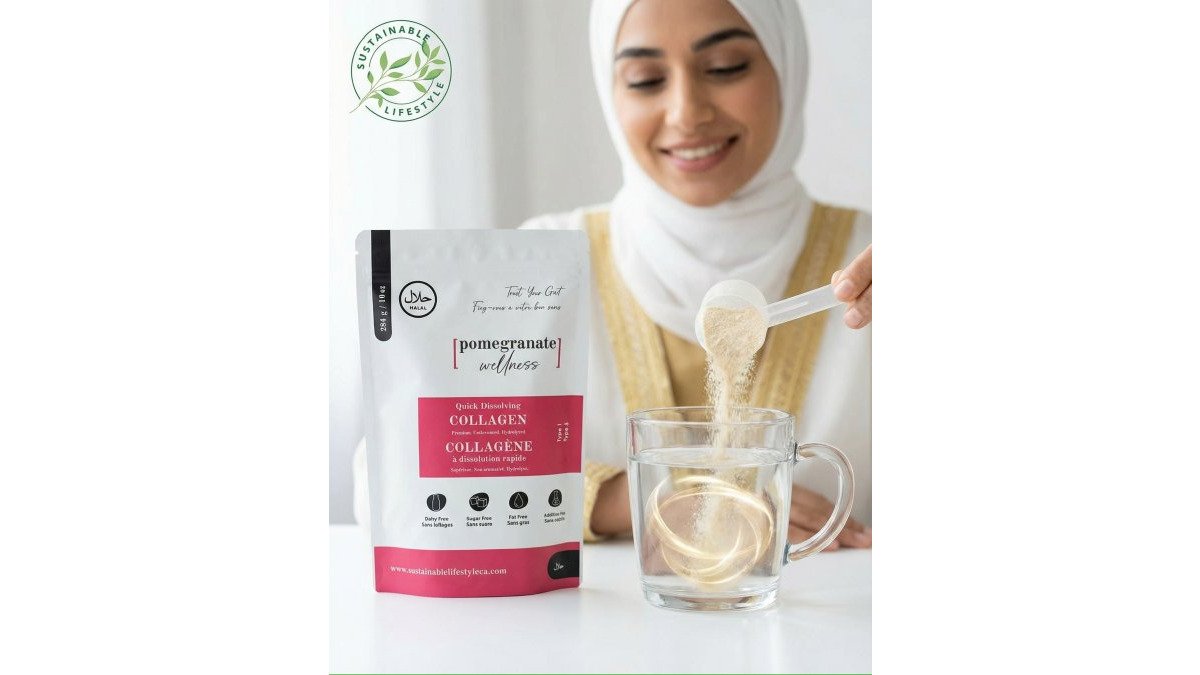
Pomegranate Wellness treats documentation as part of the product: its Halal-certified bovine collagen is unflavored, odorless, and pure, dissolving instantly into any hot or cold beverage without changing the taste, and testing documentation is available on request so buyers can review the evidence rather than rely on the claim.
Grass-Fed Bovine Collagen: Sourcing and Supply Chain Transparency
Grass-fed bovine collagen starts with cattle raised on pasture rather than grain in feedlots. Grass-fed cattle generally have lower antibiotic exposure and reduced accumulation of pesticide residues compared to grain-fed animals. This sourcing choice reduces contamination risk before processing even begins.
Supply chain transparency means the brand can trace collagen back to specific ranches or regions. Buyers should look for brands that document their sourcing: which ranches supply cattle, which processing facilities handle the collagen, and which labs conduct testing. This traceability makes it harder for contamination or substitution to occur undetected.
Sustainable Lifestyle sources from 100% grass-fed, pasture-raised cattle and maintains documentation of its supply chain. The brand's unflavoured, odourless collagen powder dissolves instantly into any beverage without changing taste, a sign of pure, high-quality hydrolyzed peptides with no fillers or additives.
When evaluating sourcing claims, buyers should verify that grass-fed certification exists. Some brands claim "grass-fed" without third-party verification. Legitimate certifications come from recognized bodies and are documented in the supply chain.
Comparing Halal Collagen Brands: Purity, Testing, and Transparency
The collagen market includes many brands claiming Halal certification and purity. Comparing them fairly requires examining both religious compliance and laboratory verification, and doing it with the same criteria for every product, so the comparison is about evidence rather than marketing volume. This section sets out a consistent framework, explains what each criterion can and cannot prove, and shows how Pomegranate Wellness addresses each one.
A Consistent Comparison Framework
Use the same six criteria for every brand you evaluate. Scoring each brand against identical questions is the only way to compare fairly.
- Collagen source and species, bovine, marine, or porcine; grass-fed or feedlot; country of origin where disclosed.
- Halal certifier and scope, which body issued the certificate, what it covers (ingredients, slaughter, facility), and whether it is current.
- Test scope, which contaminants and parameters are tested: heavy metals, microbiological screening, potency, and any others.
- Transparency, whether a lot-specific COA is available on request, and whether the lab is named.
- Additives and allergens, whether the ingredient list is a single ingredient or includes fillers, sweeteners, flavorings, or flow agents.
- Cost per serving, total price divided by the number of servings in the package, so different package sizes can be compared on equal terms.
What Each Criterion Proves, and What It Does Not
Halal certification and laboratory testing answer different questions, and neither substitutes for the other.
| Criterion | What It Verifies | What It Does Not Verify |
|---|---|---|
| Halal certification | Ingredient permissibility, slaughter method, facility handling | Contaminant levels, potency, label accuracy |
| Heavy-metal testing | Concentrations of lead, cadmium, arsenic, mercury in the tested lot | Halal status, microbiological safety |
| Microbiological screening | Absence of harmful bacteria, yeast, and mold above limits | Heavy-metal content, potency |
| Potency and amino acid profile | That the declared collagen content is present | Source species, religious compliance |
| Sourcing documentation | Species, origin, and processing traceability | Laboratory purity |
| Cost per serving | Relative value across package sizes | Quality of any kind |
A brand can score well on one row and poorly on another. The strongest products score well across the table, and the weakest rely on a single strong row, usually certification, to carry the rest.
Halal Certifiers: Why the Issuing Body Matters
Halal certification is not a single global standard. Different certifying bodies apply different criteria, and some are more rigorous about supply-chain auditing than others. When comparing brands, ask which body issued the certificate and what its scope covers. A certificate that covers the finished product is stronger than one that covers only a raw ingredient. A certificate that names the slaughter method and the facility is stronger than a generic statement that the product is "Halal suitable."
This is also where the distinction between religious compliance and purity becomes concrete: a certifier is evaluating permissibility and handling, not running heavy-metal or microbiological assays. A brand that presents its Halal certificate as proof of purity is conflating two different verification processes.
Cost per Serving: Comparing Package Sizes Fairly
Package sizes vary widely, so total price is a poor comparison tool. Divide the package price by the number of servings to get a cost per serving, then compare that figure across brands. A larger pouch usually lowers the cost per serving, but only if you will use it within the product's shelf life after opening. For buyers new to a brand, a smaller starter size is often the better test even at a higher cost per serving, because it limits the cost of finding out whether the product suits you.
How Pomegranate Wellness Addresses Each Criterion
Pomegranate Wellness is a Halal-certified bovine collagen powder. The product is completely unflavored, odorless, and pure, and it dissolves instantly into any hot or cold beverage without changing the taste. The ingredient list is a single ingredient, hydrolyzed bovine collagen peptides, with no fillers, sweeteners, flavorings, or flow agents, which keeps the formulation simple and the allergen profile narrow.
On the framework above, the brand addresses source and species (bovine collagen), certifier and scope (Halal-certified), transparency (testing documentation available on request), and additives (single-ingredient formulation). Buyers comparing it against other brands should apply the same six questions to each product and weigh the answers together rather than letting any single claim decide the purchase.
Key Takeaway
A fair brand comparison uses identical criteria for every product: source, certifier and scope, test scope, transparency, additives, and cost per serving. A brand that is strong on certification but silent on testing, or strong on testing but vague on sourcing, is only partway verified.
How to Verify Halal Collagen Claims Before You Buy
Start by requesting a Halal certificate directly from the brand. The certificate should show the certifying body's name, the product name, and the certification date. Verify that the certificate is current, most are valid for one to three years and require renewal.
Next, ask for a third-party testing certificate of analysis. Legitimate brands provide this documentation readily. Review the COA for testing methods, detection limits, and results. Confirm that the lab is accredited and that tests cover heavy metals, microbiological contaminants, and amino acid potency.
Check the ingredient list. Pure collagen powder should list only one ingredient: hydrolyzed bovine collagen peptides. Any additives, fillers, sweeteners, or flavourings reduce purity and suggest the brand is cutting corners.
Research the brand's sourcing story. Visit their website and look for specific information about cattle ranches, processing facilities, and testing labs. Vague claims like "sourced responsibly" are less credible than documented traceability. Sustainable Lifestyle publishes its sourcing practices transparently and can provide detailed supply chain documentation.
Key Takeaway
The strongest collagen brands combine three elements: valid Halal certification, recent third-party testing documentation, and transparent sourcing information. If a brand offers any one of these but not the others, it's worth asking why.
Ask the brand directly: Can they provide a current Halal certificate? Do they conduct third-party testing? Can they trace the collagen to specific cattle ranches? Brands confident in their quality answer these questions without hesitation.
Choosing a Halal collagen supplement means verifying both religious compliance and product purity. Sustainable Lifestyle delivers on both fronts with Halal-certified bovine collagen from grass-fed cattle, transparent sourcing, and a clean-label formula containing 100% hydrolyzed collagen peptides. The unflavoured, odourless powder dissolves instantly into any beverage, making it easy to incorporate into daily routines. Start with the Starter Pouch to experience the quality, or choose a larger size to build a consistent collagen routine that aligns with your faith and wellness goals.
Frequently Asked Questions
What is the difference between Halal collagen certification and third-party purity testing?
Halal-certified collagen confirms the product meets Islamic dietary laws, the animal source, processing methods, and ingredients comply with Halal standards. Third-party purity testing is a separate process where independent laboratories screen for contaminants like heavy metals, microbiological pathogens, and verify the collagen type and potency. A product can be Halal-certified without independent purity testing, and vice versa. Both matter for different reasons: Halal certification confirms religious compliance, while third-party testing verifies the product is clean and contains what the label claims.
How can I verify a Halal collagen certification before buying?
Ask the brand for their Halal certification documentation or certificate from the certifying body. Legitimate Halal-certified collagen brands display certification clearly on their website or product packaging. Request the name of the certifying organization and verify it independently. Reputable brands like Sustainable Lifestyle provide Halal certification details and sourcing information transparently. Never rely solely on a brand's claim, ask for proof. A genuine Halal certification includes the certifier's name, the certification date, and scope of what is certified (e.g., the bovine collagen powder specifically).
What should a collagen certificate of analysis include?
A complete certificate of analysis should list the collagen type (Type I, Type III, or both), amino acid profile, hydrolyzation rate, batch number, testing date, and results for contaminants including heavy metals (lead, cadmium, mercury), microbiological testing (bacteria, yeast, mold), and allergen screening. It should specify the independent laboratory name, accreditation status, and testing methods used. The certificate should also confirm the product matches label claims for potency and purity. Brands that provide detailed certificates of analysis demonstrate commitment to transparency and quality control.
Why does grass-fed bovine collagen matter for purity?
Grass-fed cattle typically have lower exposure to antibiotics, hormones, and pesticides compared to grain-fed cattle in industrial feedlots. This reduces the risk of contaminants entering the collagen supply chain. Grass-fed sourcing is one layer of quality control, but it does not replace third-party testing. The best approach combines grass-fed sourcing with independent laboratory verification for heavy metals, microbiological safety, and potency. Sustainable Lifestyle sources from grass-fed, pasture-raised cattle and maintains transparency about sourcing to support clean-label confidence.