Cart
0
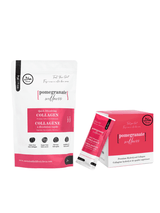
Table of Contents
- Why Grass Fed Labels Don't Prove Collagen Purity
- How Bovine Collagen Is Sourced, From Hide to Powder
- What a Bovine Collagen Certificate of Analysis Should Show
- Inside Collagen Powder Heavy Metal Testing
- Reading Detection Limits, Thresholds, and Batch Numbers
- Why Third-Party Tested Collagen Supplements Matter More Than Claims
- A Buyer's Checklist for Verifying Collagen Purity Testing
- Frequently Asked Questions
Last Updated: October 17, 2026
Why Grass Fed Labels Don't Prove Collagen Purity
A "grass fed" claim tells you what the cattle ate, not what ended up in the powder. Collagen purity testing is the lab work that checks a product for heavy metals, contaminants, and microbial safety, and it is separate from sourcing: pasture-raised cattle can still yield lead or arsenic if hides were poorly handled. Grass fed is a diet claim; purity is a measurement that needs a lab report with a batch number on it. Below, we'll show you how to read those reports and verify a product before you buy.
Watch Out
A grass fed logo on the front of a pouch is not proof of low heavy metals. Without a batch-specific lab report, you have no way to confirm what is actually in the powder.
How Bovine Collagen Is Sourced, From Hide to Powder
Bovine collagen starts with cattle hides, which are cleaned and heated in water to extract gelatin. Enzymes then break the gelatin into smaller peptides in a step called hydrolysis, and the result is dried into powder. Sourcing decisions shape purity at every stage: animal diet, how quickly hides are chilled and cleaned after slaughter, temperature control during extraction, and enzyme type and timing during hydrolysis. Organic and grass fed are not the same thing, and neither is a contaminant test.
What a Bovine Collagen Certificate of Analysis Should Show
A bovine collagen certificate of analysis is a lab document listing the tests run on a specific batch and the results for each. It is the single most useful document a buyer can request.
The real skill is reading the document line by line, in the order a lab report is usually laid out.
1. Header and sample identity
The top of the report should name the product exactly as it appears on the packaging, the batch or lot number, the manufacturing date, and the date the lab received the sample. A report naming a generic "bovine collagen powder" without a lot number cannot be tied to the pouch in your hand, so match the batch number to the packaging exactly, the same string, not a similar number or production code.
2. Laboratory identity and accreditation
The report should name the laboratory and show an accreditation mark or number. In Canada, look for a lab accredited to ISO/IEC 17025, the international standard for testing and calibration laboratories. Accreditation is not a guarantee of a clean result, but it confirms the lab has been assessed against a recognized quality system; a report with no lab name, accreditation reference, or signature is not a certificate of analysis in any meaningful sense.
3. The analyte table
This is the core of the document. Each row should show the analyte tested, the method, the result, the unit, and the detection or quantification limit. A complete heavy metals panel covers lead, arsenic, cadmium, and mercury; a microbiological panel covers total plate count, yeast and mold, E. coli, and Salmonella. Read each row as a sentence: analyte, method, result, unit, limit. A result of "0.02" means nothing without the unit, heavy metals are typically reported in mg/kg or µg/kg, so 0.02 mg/kg is 20 µg/kg. Always confirm the unit before comparing reports.
4. Methods
The method column tells you how the lab measured each analyte. Heavy metals are commonly measured by inductively coupled plasma mass spectrometry (ICP-MS), while microbiological tests are usually culture-based. You need not be a chemist to read this column, but notice when it is blank: a result with no method listed is a result you cannot evaluate.
5. Detection and quantification limits
Each row should state the smallest amount the method can reliably detect (the limit of detection) and quantify (the limit of quantification). A "not detected" result is only meaningful if the detection limit is low relative to the applicable threshold.
6. Results and conclusion
The results column gives the measured value, and the conclusion column, when present, states whether the batch passed the specification the lab tested against. Read it with care: "pass" means the batch met that specification, not that the product is free of every possible contaminant.
7. Authorization
The bottom of the report should carry the name and signature of the analyst or reviewer, and often a stamp. An unsigned report is unfinished.
Pro Tip
Ask the brand to send the full report, not a screenshot of the results table. The header, methods, limits, and signature are where most problems hide, and a cropped image usually removes exactly those parts.
A certificate that survives all seven checks is a strong signal. A certificate that fails any one of them, no batch number, no lab name, no units, no limits, is not proof of anything, no matter how clean the results column looks.
Inside Collagen Powder Heavy Metal Testing
Collagen powder heavy metal testing looks for four main contaminants: lead, arsenic, cadmium, and mercury. Cattle can absorb these from soil, water, and feed, and they can concentrate in hides and bone material over time. Labs use methods like inductively coupled plasma mass spectrometry to detect metals at very low levels, reporting a number beside each metal, usually in parts per million or parts per billion.

Pro Tip
Ask the brand what detection limit their lab uses for lead. A brand that can answer this quickly is one that actually reads its own reports.
Reading Detection Limits, Thresholds, and Batch Numbers
Detection limits and thresholds are not the same thing. A detection limit is what the lab can measure; a threshold is the maximum level a regulator or quality standard allows. You need both to judge a result.
Limit of detection versus limit of quantification
Two numbers sit behind every "not detected" result. The limit of detection (LOD) is the smallest amount the method can distinguish from background noise; the limit of quantification (LOQ) is the smallest amount it can measure with acceptable precision, usually higher than the LOD.
Starter Pouch : Unflavoured Halal Collagen Powder 10oz (284g) →
A lab with a low LOQ gives a more informative result than one with a high LOQ, even when both report "not detected." When a brand cannot tell you its LOQ for lead, treat the result as unverified rather than clean.
How a result is compared against a threshold
A threshold is the maximum level a regulator or quality standard permits for a given contaminant in a given product category. To judge a result, line up three numbers: the measured result, the LOQ, and the applicable threshold.
Health Canada publishes maximum levels for chemical contaminants in foods, and those limits are the reference point when you compare a result against a threshold. The Health Canada guidance on contaminants is the document to check. Note that limits are set per contaminant and per food category, so the applicable number depends on how the product is classified.
Batch numbers and sample identity
Batch numbers are the weak point in most buyer checks. A report is only valid for the lot it names. Three checks confirm the link: the report names a batch or lot number, the packaging carries the same string exactly (including letters and leading zeros), and the report date falls within the batch's production window. A single certificate covering all products, a certificate with no date, or a report naming a different product form is a red flag.
A worked reading order
| Step | What to Check | Why It Matters |
|---|---|---|
| 1 | Batch number on report matches the pouch | Confirms the test belongs to your product |
| 2 | Report date falls within the batch window | Confirms the test postdates production |
| 3 | Lab name and accreditation | Confirms an independent, assessed lab ran the test |
| 4 | Units are stated for every result | Confirms results are comparable |
| 5 | LOD and LOQ are listed and low | Confirms "not detected" is meaningful |
| 6 | Results sit below applicable thresholds | Confirms the product passes the standard |
| 7 | Micro panel is included | Confirms process safety, not just metals |
Key Takeaway
A clean result is only as strong as the limit behind it. A low LOQ, a matching batch number, and a threshold from a named source turn a number into evidence. Without those three, a "pass" is just a word.
What grass fed does and does not tell you
Grass fed describes what the cattle ate, not what the finished powder contains. A pasture-raised herd can still produce hides that pick up lead or arsenic during handling, and a clean heavy metals panel says nothing about diet. The two claims are independent, and a strong product should support both, a named supplier or region for sourcing, and a batch-specific report for purity.
Why Third-Party Tested Collagen Supplements Matter More Than Claims
Third-party tested collagen supplements are tested by a lab with no financial tie to the brand.
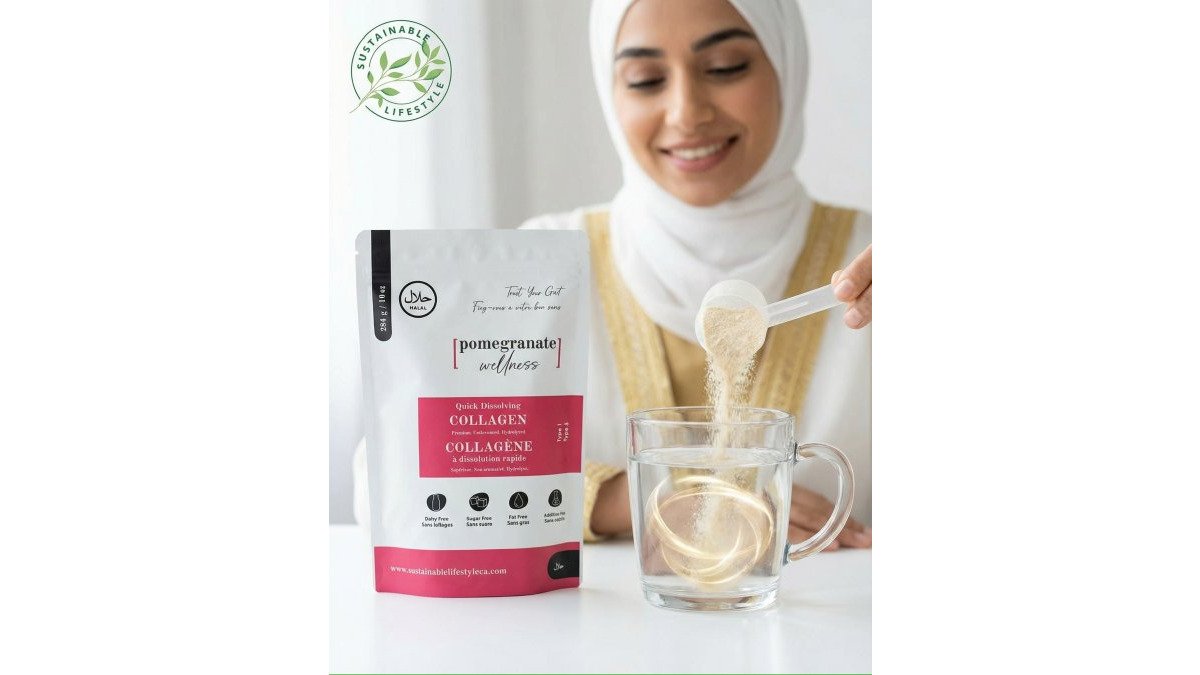
Sustainable Lifestyle treats this as a baseline, not a bonus. Its pure Halal bovine collagen powder is Halal-certified, made from grass-fed, pasture-raised cattle, and completely unflavored and odorless, free from gluten, dairy, soy, sugar, and artificial preservatives.
That is the standard to hold every brand to. Sourcing claims are the start. Testing is the proof.
A Buyer's Checklist for Verifying Collagen Purity Testing
Use this checklist before you commit to any collagen powder. It takes about ten minutes.
- The brand publishes a certificate of analysis for the specific product
- The report shows a batch or lot number
- The batch number matches the packaging you received
- The testing lab is independent and named
- The lab shows an accreditation number
- A heavy metals panel covers lead, arsenic, cadmium, and mercury
- Detection limits are listed for each test
- A microbiological panel is included
- Results sit below recognized thresholds
- The brand can explain its sourcing and hide handling
- The grass fed claim is backed by a named supplier or region
- Halal certification comes from a recognized certifying body
For readers who want a clean, unflavored option that meets these checks, the Starter Pouch of unflavored Halal collagen powder offers 28 servings of grass-fed bovine collagen peptides.
Collagen purity is not something a label can promise. It takes a batch number, an independent lab, and a report you can actually read. That is a higher bar than most brands clear, and it is the one worth holding.
Frequently Asked Questions
How can you tell whether bovine collagen is pure?
Start with the paperwork, not the packaging. A pure bovine collagen product should come with a batch-specific certificate of analysis from an independent laboratory, showing results for heavy metals, microbial counts, and identity or potency. Match the batch number on the report to the number printed on your pouch or box. If the report has no batch number, covers a different product, or only lists vague claims like 'lab tested' without results, treat the purity claim as unverified. Purity is something a brand can demonstrate with documents, not something a label asserts.
What should a collagen certificate of analysis include?
A useful certificate of analysis lists the product name, the batch or lot number, the date of testing, and the laboratory that performed the work. It should show each test performed, the result, the method used, and the specification or limit the result is compared against. For collagen, expect heavy metal screens (lead, arsenic, cadmium, mercury), microbiological tests, and some measure of protein content or identity. A report missing the batch number or the actual numeric results tells you very little about the powder in your hand.
How is grass-fed bovine collagen tested for contaminants?
Independent labs typically use instruments such as inductively coupled plasma mass spectrometry to detect trace heavy metals at very low concentrations, and culture-based methods to check for bacteria, yeast, and mold. Some panels also screen for other process-related residues. The key detail for buyers is the detection limit: a result reported as 'not detected' only means the substance was below the level the method can measure. Ask what that limit is, and compare it against the specification the brand set for the product.
Does grass-fed collagen need third-party testing?
Grass-fed describes what the cattle ate, not what ended up in the powder. A grass-fed claim says nothing about heavy metal content, microbial safety, or whether the powder is what the label says it is. Third-party testing, meaning testing by a laboratory independent of the manufacturer, is how a brand shows the finished batch meets its own specifications. Without it, you are relying on the seller's word for both sourcing and purity, and those are two separate questions.