Cart
0
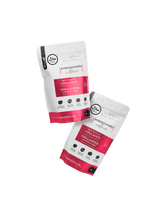
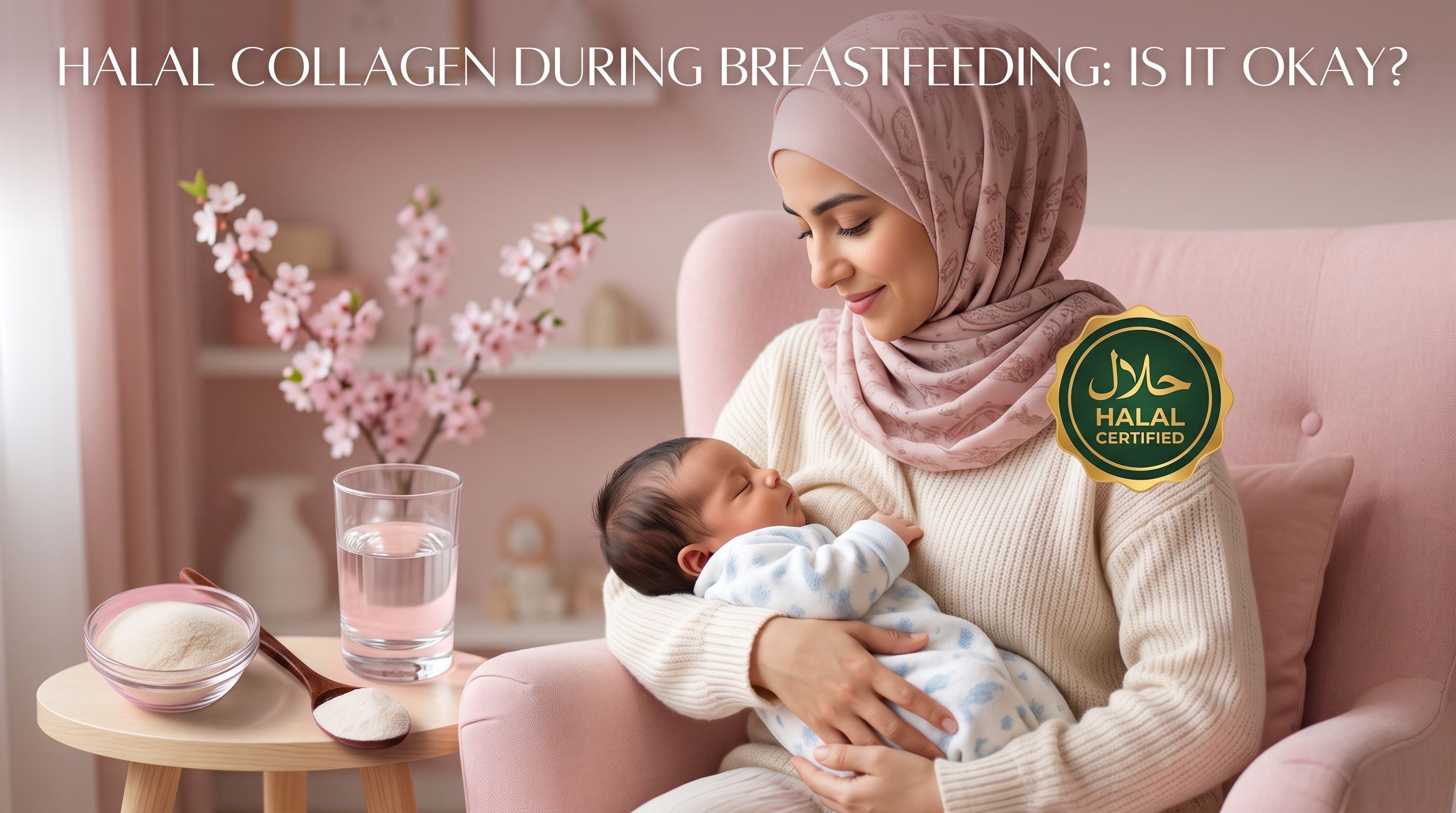
The question usually comes up in a very real moment - you are postpartum, your hair is shedding more than usual, your skin feels tired, and you want support without second-guessing the ingredients. If you are considering halal collagen during breastfeeding, the main concern is not hype. It is whether the product is clean, halal-certified, simple enough for daily use, and appropriate for this stage of recovery.
For many breastfeeding moms, collagen feels appealing because it is familiar, easy to mix into coffee or smoothies, and often marketed for hair, skin, nails, and overall wellness. But breastfeeding is not the time to grab the first tub you see online. The source, certification, ingredient list, and formulation matter more than the front-label promises.
Is halal collagen during breastfeeding safe?
In many cases, a plain collagen supplement can fit into a breastfeeding routine, but it depends on the product and your individual situation. Collagen is a protein source made up of amino acids, and unflavored bovine collagen with a short ingredient list is generally the type people look for when they want something simple.
That said, no supplement should be treated like an automatic yes during breastfeeding. If you have a medical condition, food sensitivities, postpartum complications, or you are taking medications, it is smart to check with your physician or a qualified healthcare professional first. That extra step matters even more if the supplement includes added vitamins, herbs, sweeteners, or beauty blends that go far beyond pure collagen.
The safest approach is usually the least complicated one. A halal-certified bovine collagen powder with no sugar, no dairy, no gluten, and no fillers is easier to assess than a flavored product packed with extras.
Why Muslim moms look specifically for halal collagen
For Muslim families, this is not just about wellness. It is also about confidence in sourcing and compliance. Collagen is often animal-derived, which means the halal status cannot be assumed.
Some collagen products use bovine sources without clear slaughter standards. Others may use marine sources, which can work for some buyers but are not always the first choice for daily use. The bigger issue is transparency. If a brand does not clearly state halal certification, source, and manufacturing standards, that uncertainty is enough to make many shoppers move on.
Halal certification gives needed reassurance. It tells you the product was reviewed for compliance instead of relying on vague language like clean or high quality. During breastfeeding, that kind of clarity matters even more because you are choosing with extra care.
What collagen can and cannot do postpartum
Collagen is often associated with hair growth and glowing skin, but postpartum recovery is more nuanced than a single scoop solving everything. Breastfeeding, hormonal shifts, stress, sleep disruption, hydration, and overall diet all affect how you feel and how you look.
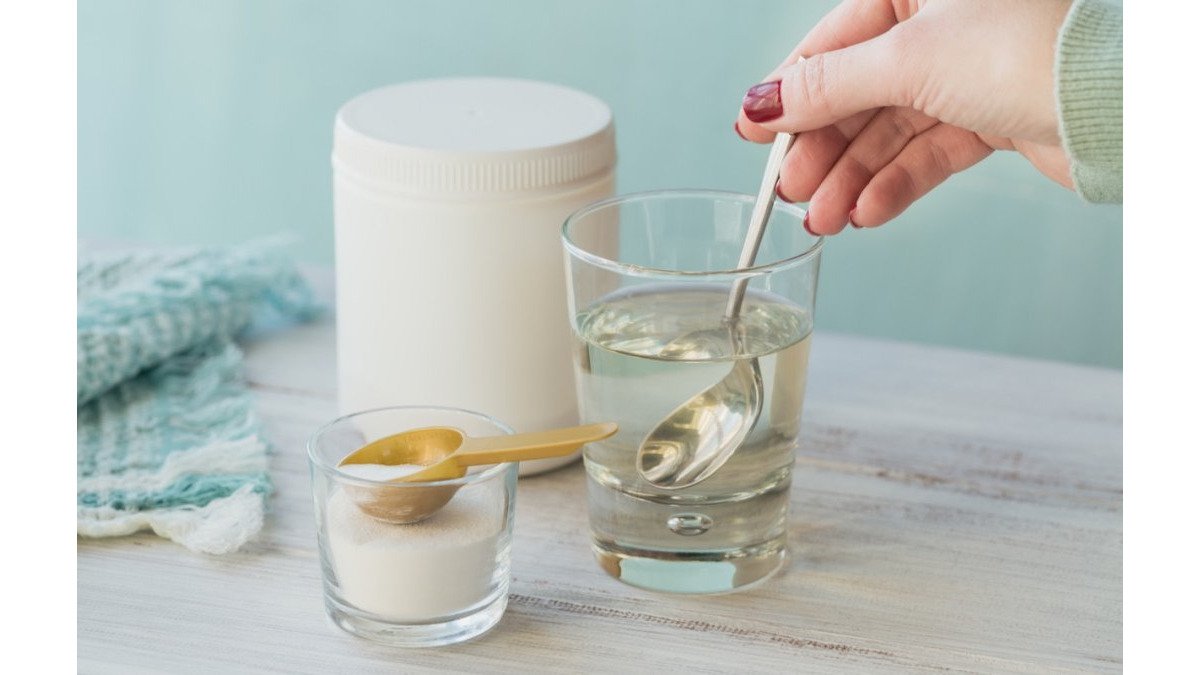
Collagen may support your daily protein intake and provide amino acids that play a role in skin structure and connective tissue support. Some women like it because it is easy to use consistently, especially when meals are rushed. If your routine is chaotic, adding an unflavored scoop to oatmeal, tea, or a smoothie can feel practical rather than complicated.
But collagen is not a direct treatment for postpartum hair shedding. That shedding is usually tied to hormones, and it often improves with time. The same goes for skin changes. A collagen supplement may fit into a broader wellness routine, but it should not be sold as a miracle fix.
That trade-off matters. A trustworthy product should be presented as support, not as a promise that overrides rest, nourishment, hydration, and medical care when needed.
What to check before buying halal collagen during breastfeeding
This is where label reading matters most. A good product for this stage should feel clean and straightforward. The first thing to check is halal certification, not just a claim that it is suitable for Muslims. Certification adds credibility that matters when the collagen is animal-based.
Next, look at the ingredient panel. Ideally, there is one main ingredient: hydrolyzed bovine collagen peptides. The fewer extras, the easier it is to evaluate. If a formula includes herbal blends, caffeine, adaptogens, artificial flavors, or high-dose vitamins, it may not be the best fit while breastfeeding unless your healthcare provider says otherwise.
You should also check for common add-ons you may be trying to avoid, such as sugar, dairy, gluten, gums, or fillers. Many moms want something that disappears into a drink without adding sweetness or digestive heaviness. Unflavored collagen tends to be the most flexible option for that reason.
Third-party testing is another strong trust signal. It shows the brand is willing to verify quality beyond marketing language. For many Muslim shoppers, the ideal combination is clear halal certification, clean sourcing, and testing that supports purity claims.
Powder or sachets: what works best when breastfeeding?
This comes down to routine. If you are mostly at home and want the best value per serving, a pouch or tub often makes the most sense. You can keep it by the kettle or coffee machine and make it part of the morning without much thought.
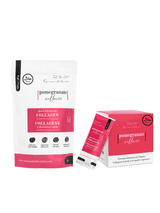
If you are moving between home, family visits, and diaper bag chaos, sachets can be much easier. Pre-portioned collagen takes away the measuring step, which sounds small until you are sleep-deprived and holding a baby. Convenience is not a luxury in the postpartum phase. It often determines whether a supplement becomes a habit or just sits in the pantry.
A lot of moms do best with whichever format removes friction. The best collagen routine is usually the one you can actually keep.
Who should be more cautious?
Even a clean halal collagen product is not a blanket recommendation for every breastfeeding mother. If you have a history of allergies, digestive issues, kidney concerns, or a medically restricted diet, personalized guidance matters.
Caution also makes sense if the product is marketed as a beauty blend instead of a plain collagen supplement. Those formulas often include extra active ingredients that may be unnecessary or harder to assess during breastfeeding. Simple is usually better.
And if you notice any discomfort after starting a supplement, stop and review the formula carefully. Sometimes the issue is not the collagen itself but flavoring systems, sweeteners, or other additives.
What makes a better halal collagen product?
A better product is not the one with the loudest claims. It is the one with the clearest standards. For breastfeeding moms, that usually means halal-certified bovine collagen from grass-fed sources, no fillers, no sugar, no dairy, no gluten, and no artificial ingredients.
It should also mix easily into hot or cold drinks and fit naturally into everyday life. That sounds basic, but it matters. A supplement does not help much if the taste is strong, the texture is unpleasant, or the formula is bloated with ingredients you did not ask for.
This is one reason many Muslim shoppers prefer specialized halal wellness brands over mainstream collagen labels. When halal is treated as a core requirement rather than an afterthought, the product tends to answer the real questions up front: what is the source, is it certified, is it clean, and is it easy to use daily?
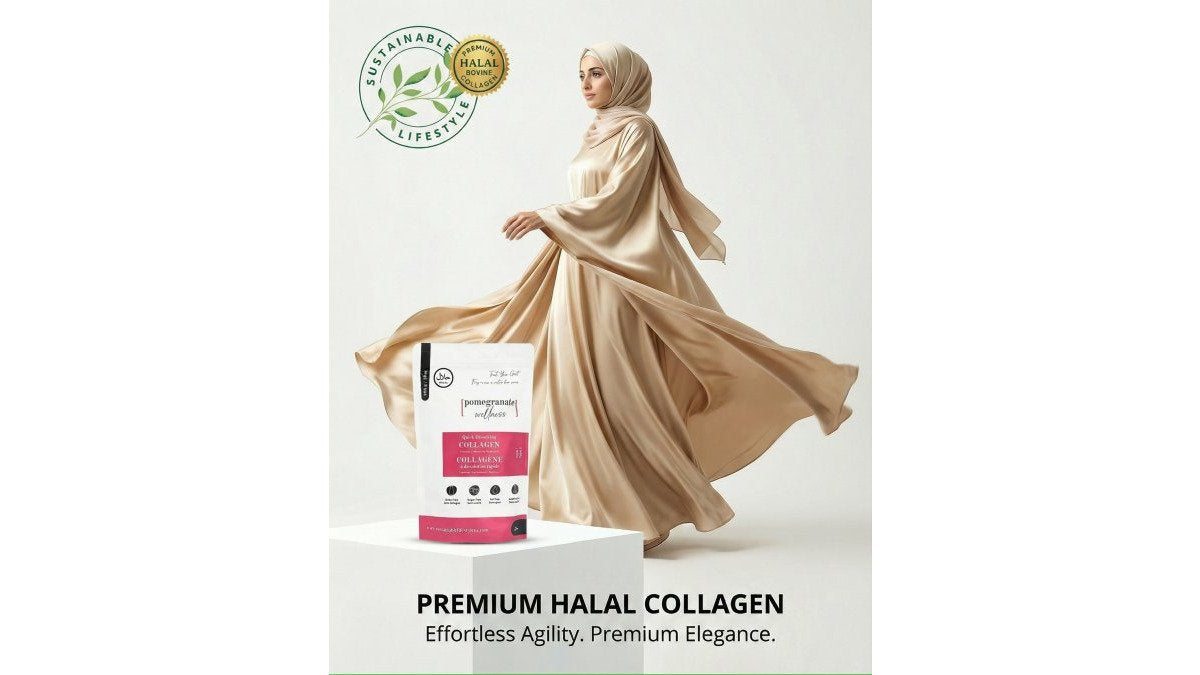
For example, a Muslim-owned brand like Sustainable Lifestyle speaks more directly to those concerns because the product is built around halal certainty, purity, and practical use instead of asking customers to investigate every detail themselves.
A practical way to decide
If you are thinking about adding collagen while breastfeeding, keep the decision simple. Start with your priorities. Do you want halal certification you can trust? A single-ingredient formula? No sugar or fillers? A format that fits your day?
If the answer is yes, then the right product will usually look very plain on paper - and that is a good thing. Plain, clean, and clearly certified is often the smarter choice than a trendy formula with a long list of extras.
Breastfeeding is already a season of constant decisions. Your supplements should not add more uncertainty. Choose the option that respects both your health goals and your faith, and if you need medical reassurance, ask for it without hesitation. Peace of mind is part of wellness too.