Cart
0


Table of Contents
- What Makes Grass Fed Collagen Different
- Does Collagen Help Skin Elasticity?
- Joint Mobility and Bone Density Support
- Gut Lining, Digestion, and Muscle Recovery
- How Long Does It Take for Collagen to Work?
- Best Practices for Taking Collagen
- Sourcing, Storage, and Supplement Interactions
- Conclusion
- Frequently Asked Questions
Last Updated: September 14, 2026
What Makes Grass Fed Collagen Different
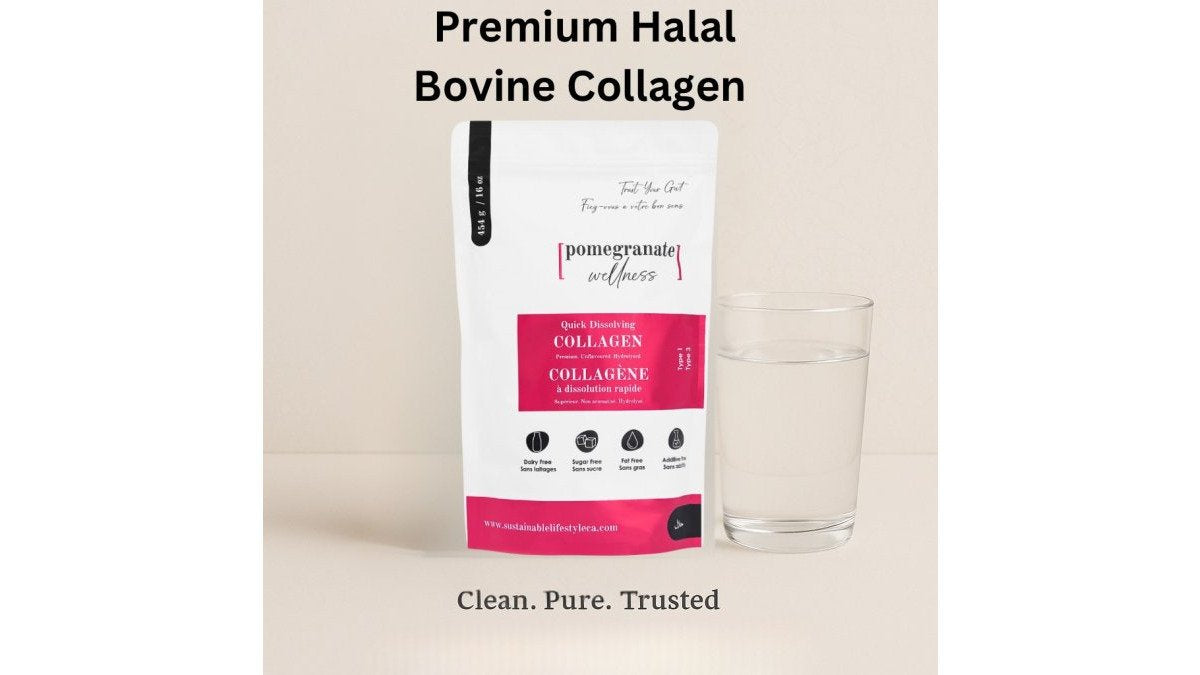
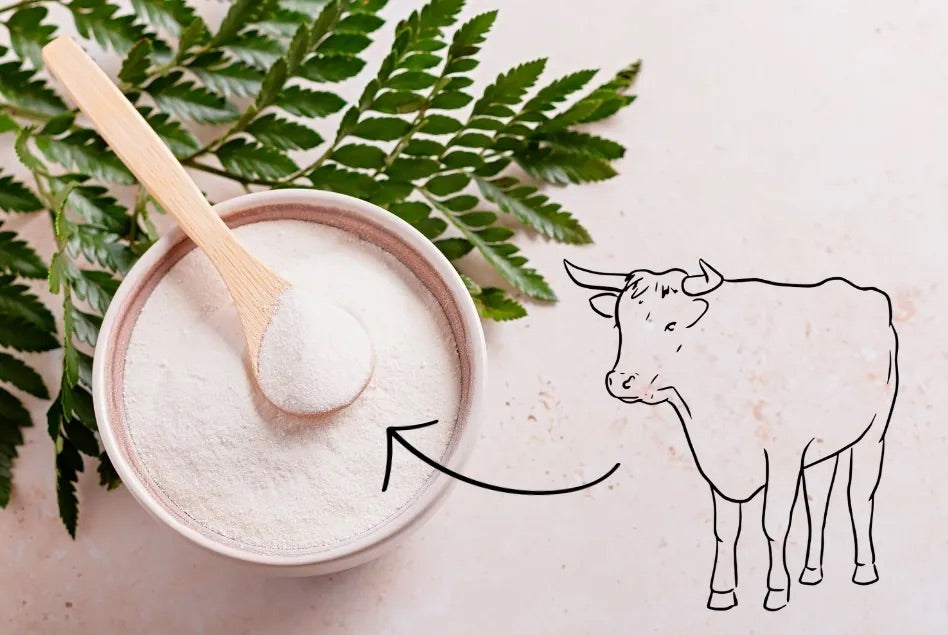
Grass fed collagen is a bovine collagen supplement sourced from cattle raised on pasture rather than grain feedlots. The distinction matters less for the collagen molecule itself and more for what comes with it: the animal's diet, the farming practices behind it, and the traceability of the supply chain.

At Sustainable Lifestyle, the team sources collagen exclusively from grass-fed bovine herds, then hydrolyzes it into peptides small enough for the body to absorb efficiently.
Grass Fed vs. Conventional Collagen
The amino acid profile of grass-fed and conventional bovine collagen is broadly similar. Both deliver glycine, proline, and hydroxyproline, the three amino acids that make up the bulk of collagen's structure.
Where they diverge is in sourcing and certification. Grass-fed cattle operations typically avoid routine antibiotic use and growth hormones, and the resulting collagen carries a cleaner label. For Muslim buyers, the deciding factor is usually Halal certification, not the feed alone. A grass-fed source means nothing if the slaughter and processing don't meet Islamic requirements.
| Factor | Grass Fed Collagen | Conventional Collagen |
|---|---|---|
| Cattle diet | Pasture-based | Grain-based feedlot |
| Routine antibiotics | Typically avoided | Commonly used |
| Hormone use | Typically avoided | Common in some regions |
| Label profile | Cleaner, fewer additives | Variable |
| Halal certification | Depends on processor, not feed | Depends on processor, not feed |
That last row is the one most guides skip. Feed quality and Halal status are separate questions, and a product needs to answer both.
Does Collagen Help Skin Elasticity?
Collagen supplementation can support skin elasticity, though the effect builds gradually rather than appearing overnight. Skin elasticity depends on the structural integrity of the dermal matrix, and collagen peptides supply the amino acid building blocks the body uses during collagen synthesis.
Type I and type III collagen are the forms most relevant to skin. Type I dominates in skin, bone, and connective tissue. Type III is more prevalent in early wound healing and in younger skin. A bovine collagen supplement typically contains both.
What most guides miss is that collagen doesn't replace your existing collagen. It provides raw material and signaling peptides that may support the body's own production. Antioxidants and omega-3 fatty acids from diet also influence how well skin holds up over time, so collagen works best as part of a broader routine rather than a standalone fix.
Fine lines and wrinkles soften when skin retains moisture and maintains elasticity. Many users report visible changes over a period of consistent daily use. Results vary by individual, age, and baseline skin condition.
Joint Mobility and Bone Density Support
Joint discomfort and declining bone mineral density are two of the most common reasons adults over 40 look at collagen. The mechanism is connective tissue support: collagen peptides may help maintain the cartilage matrix that cushions joints, and the amino acids glycine and proline feed that matrix.
What Is Actually Happening in the Joint
Cartilage is largely type II collagen, a mesh that holds water and resists compression. As cartilage thins with age and load, the joint loses some of that cushioning. Collagen peptides are not cartilage, they are short amino acid chains that the body can use as raw material and that appear to signal connective tissue cells. That distinction matters: supplementation supports the body's own repair processes rather than replacing tissue directly.
A common pattern practitioners describe is that joint comfort changes are gradual and cumulative, showing up over weeks to months of consistent use rather than after a single dose. Anyone expecting same-day relief from a joint supplement is looking at the wrong category.
Bone Is Not Just Calcium
Bone is a composite: mineral crystals (calcium and phosphate) bound to an organic collagen scaffold. Roughly a third of bone mass is collagen, which is why bone health discussions that focus only on calcium miss half the picture. The collagen framework is what gives bone its flexibility and resistance to fracture; mineral without that framework is brittle.
This is also why collagen is best understood as one input among several. Vitamin D supports calcium absorption, weight-bearing movement signals bone to remodel, and adequate total protein supplies the broader amino acid pool. Collagen fits into that picture, it does not replace it.
Dosage for Joint Goals vs. Skin Goals
Generic advice of "one to two scoops" is not useful when the goal differs. A more practical framing:
- General skin, hair, and joint support, around 10 grams per day is a common baseline.
- Joint-focused routines, many users and practitioners work in the 10 to 15 gram range daily, sustained over months rather than weeks.
- Skin-focused routines, the same baseline range is typical, with consistency mattering more than pushing the dose higher.
These are starting points, not prescriptions. Individual response varies with age, baseline connective tissue condition, activity level, and overall diet. If you have a diagnosed joint condition or are managing bone loss, collagen is a complement to medical care, not a substitute for it.
Muscle Recovery and Connective Tissue
Muscle protein synthesis draws on amino acids, and collagen's glycine content supports recovery after physical activity. Fitness enthusiasts often stack collagen with resistance training for this reason. The important caveat: collagen is not a complete protein. It lacks tryptophan and is low in leucine, so it should not replace whey or a full-spectrum protein source after training. Where it helps is in connective tissue, tendons, ligaments, and cartilage, which recover more slowly than muscle.
Key Takeaway
Collagen supports joint and bone health as part of a complete approach that includes movement, adequate protein, and vitamin D. It is not a replacement for medical treatment of arthritis or osteoporosis.
For anyone building a joint-focused routine, an unflavored, odorless powder that dissolves instantly into any hot or cold beverage makes daily consistency easier, which is the variable that matters most over months of use.
Gut Lining, Digestion, and Muscle Recovery
The gut lining is a single-cell-thick barrier that regulates what passes into the bloodstream. Collagen's amino acids, particularly glutamine and glycine, support the mucosal layer and the tight junctions between cells. Gastrointestinal health and collagen supplementation are linked in this way, though the research continues to develop.
Digestive enzymes break collagen peptides into di- and tripeptides, which absorb through the intestinal wall. This is why hydrolyzed collagen outperforms gelatin for supplementation: the peptide chains are already short.
For muscle recovery, collagen is not a complete protein. It lacks tryptophan and is low in leucine, so it shouldn't replace whey or a full-spectrum protein source after training. Where it helps is in connective tissue repair, tendons, ligaments, and cartilage, which recover more slowly than muscle.
A common mistake is treating collagen as a protein powder substitute. It isn't one. Use it alongside protein, not instead of it.
How Long Does It Take for Collagen to Work?
Most people notice early changes in skin hydration within a few weeks, while joint and hair benefits typically take longer, often two to three months of daily use. Consistency matters more than dose timing.
Hair and nail changes are the slowest to appear because those structures grow on their own cycle. Postpartum hair loss, in particular, follows a hormonal timeline that collagen can support but not override. Anyone expecting regrowth in two weeks will be disappointed.
The honest answer: collagen is a cumulative supplement. Skipping days resets progress. A daily habit sustained over months is what produces results.
Watch Out
Stopping collagen after two weeks because "nothing happened" is the most common reason people conclude it doesn't work. Skin and joint changes need consistent daily use over several weeks before they become noticeable.
Best Practices for Taking Collagen
Daily consistency and correct mixing matter more than the specific time of day. Collagen powder works in hot or cold beverages, and an unflavored, odorless formula dissolves cleanly without altering taste.

Dosage, Timing, and What to Avoid
A common approach is 10 grams per day for general skin, hair, and joint support, adjusted upward for specific goals. Timing is flexible. Some prefer morning with coffee, others before bed.
Sourcing, Storage, and Supplement Interactions
What Certifications Actually Matter
Storage and Shelf-Life
Stacking Collagen With Other Supplements
Pro Tip
Unflavored, odorless collagen is the most flexible base for stacking because it disappears into coffee, tea, smoothies, or water without altering taste, which makes it easy to combine with vitamin C-rich foods or other supplements in the same drink.
Conclusion
Frequently Asked Questions
Is grass fed collagen better for you than conventional collagen?
Grass fed collagen comes from cattle raised on pasture rather than grain, which affects the nutrient profile of the raw material. It is typically higher in omega-3 fatty acids and conjugated linoleic acid, and it carries no added hormones or antibiotics. The collagen itself still delivers the same amino acids, including glycine, proline, and hydroxyproline, but the sourcing standards are stricter. For buyers who want a clean label and ethical sourcing, grass fed collagen is the stronger choice.
How long does it take for collagen to work on skin and hair?
Most people notice early changes in skin hydration and smoothness within four to eight weeks of daily supplementation. Hair and nail changes take longer because those tissues grow slowly, so expect 12 weeks or more before you see meaningful differences. Consistency matters more than dose size. Missing days resets your progress, so build collagen into a fixed daily routine rather than taking it sporadically.
Can I mix unflavoured collagen into hot and cold beverages?
Yes. Hydrolyzed collagen peptides dissolve in both hot and cold liquids, so coffee, tea, smoothies, soups, and plain water all work. The powder is flavourless and odourless, which means it will not change the taste of whatever you add it to. Stir or whisk briefly and drink it right away. Avoid leaving it sitting in a hot drink for a long time, since prolonged heat exposure can affect texture.
What are the best practices for taking collagen daily?
Take 10 to 20 grams per day, split into one or two servings if that suits your routine. Pair it with vitamin C, which supports collagen synthesis, and take it alongside protein-rich meals for better peptide absorption. Keep the pouch sealed in a cool, dry place away from direct sunlight. If you take other supplements or medication, space collagen at least two hours apart and check with your pharmacist before starting.