Cart
0
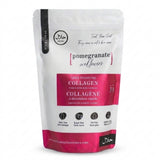

Last Updated: November 15, 2026
Quick Summary
Halal collagen is worth the extra cost if you need Halal-certified sourcing, since it comes from cattle slaughtered under Islamic law and verifiable certification matters. Cost per gram of collagen, not per pouch, is the fair way to compare, and larger pouches lower the per-serving price. If Halal sourcing is not a requirement, a standard collagen powder may suit you for less.
- Verify halal certification by naming the certifying body and checking the certificate number.
- Confirm the certificate covers your exact product and the facility that packs it.
- Normalize prices to cost per gram of collagen before comparing products.
- The 16oz value pouch lowers the cost per serving compared with the 10oz starter pouch.
- Track results over 8 to 12 weeks, since supplements work on a timeline of weeks.
Table of Contents
- What Makes Halal Collagen Different From Regular Collagen
- How to Verify Halal Collagen Certification
- Comparing Collagen Powder Cost Per Serving
- What the Evidence Says About Collagen Benefits
- Does Collagen Supplementation Work, and What Results to Expect
- Pros and Cons of Investing in Halal Collagen
- Choosing Your Halal Collagen Pouch Size
- Frequently Asked Questions
What Makes Halal Collagen Different From Regular Collagen
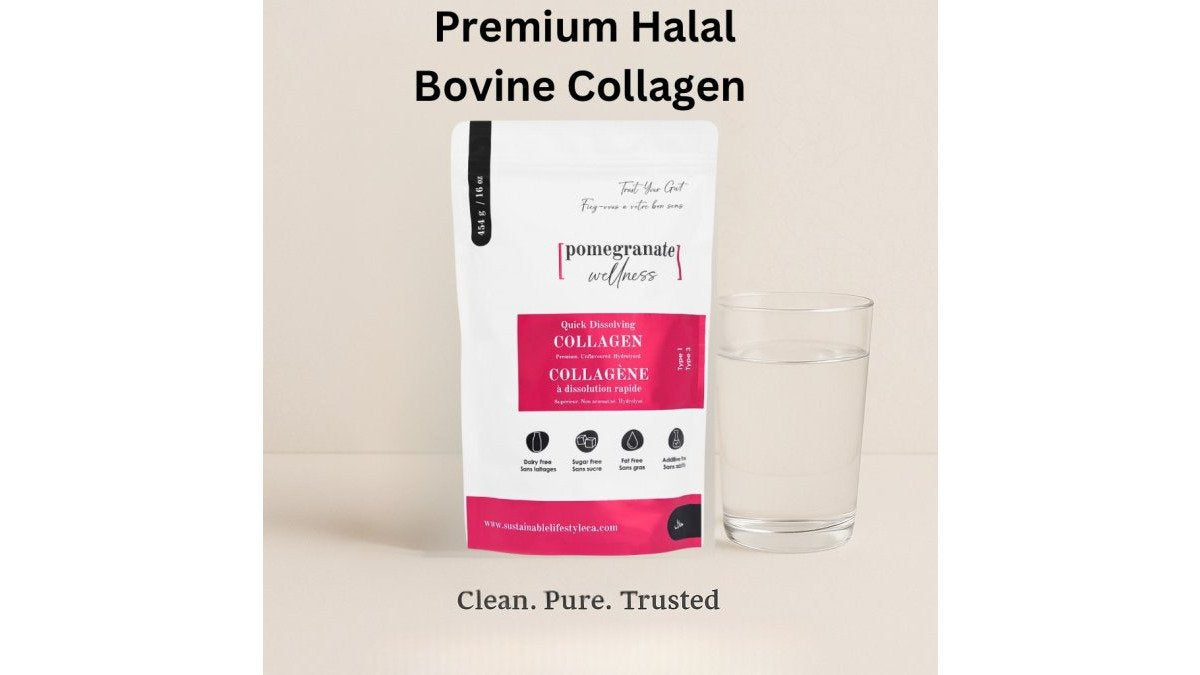
Halal collagen is bovine collagen sourced from cattle slaughtered according to Islamic dietary law, which is the main point that separates it from ordinary collagen powder. For Muslim shoppers in Canada, the source of the animal matters as much as what is in the pouch. Pomegranate Wellness collagen is pure hydrolyzed bovine collagen peptides, sourced from pasture-raised, grass-fed cattle and Halal-certified through Zabiha hand-slaughter.
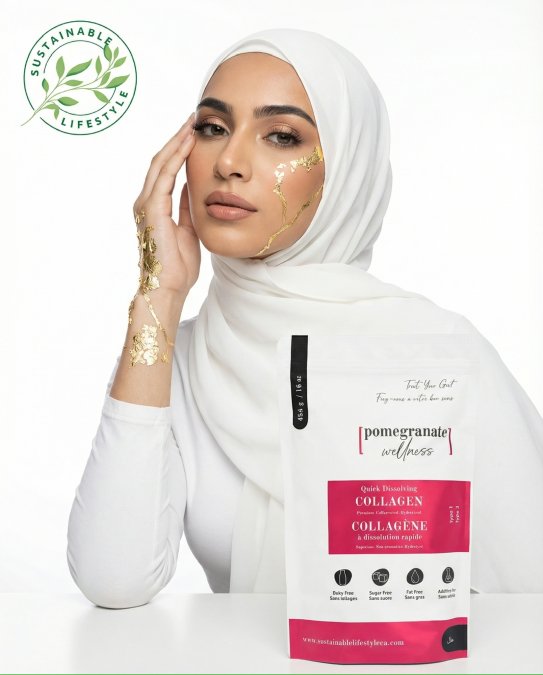
Beyond sourcing, the formula itself is simple. The product is completely unflavoured and odourless, with no sweeteners, fruit flavouring or additives. That means it dissolves into hot or cold drinks without changing their taste. Reading the ingredient list is a useful first step when comparing collagen powders.
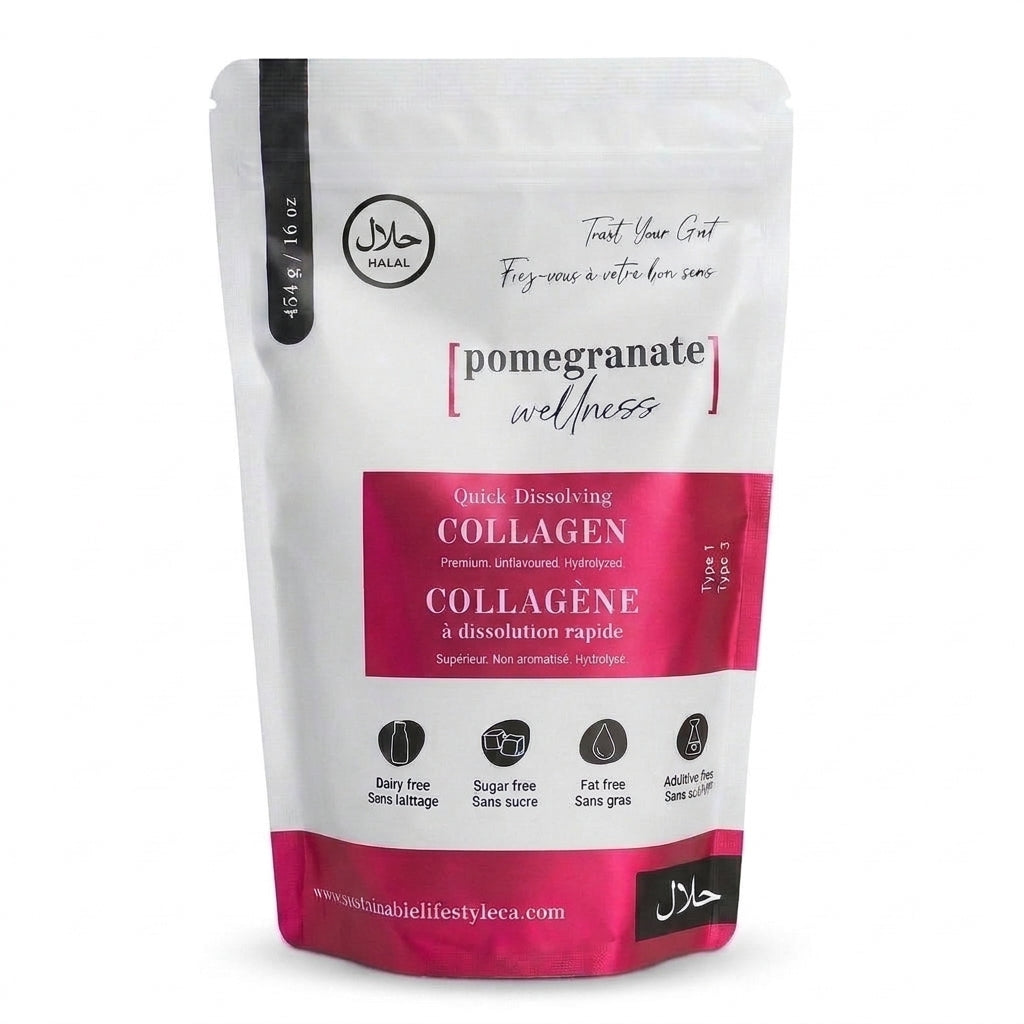
The practical difference shows up in the label. A Halal-certified product should state its certification clearly and name the sourcing method. The Pomegranate Wellness starter pouch lists 100% hydrolyzed bovine collagen peptides (Types I and III) as its only ingredient, with 9g of protein per 10g serving.
How to Verify Halal Collagen Certification
A halal logo on a pouch is a claim, not proof. Verification means checking four things in order: the certifying body, the certificate itself, the scope of that certificate, and the supply-chain documentation behind it. Most shoppers stop at step one, which is why unverifiable claims survive on shelves.
Step 1: Name the certifying body. A legitimate Halal-certified product names the organization that issued the certificate, either on the label, the product page, or both. Follow this step-by-step guide to verifying halal claims on a product for the full process. Write that name down.
Step 2: Confirm the body exists and is recognized. Search the certifying body's name directly and confirm it has a real website, a physical address, and a published certification process. Certification bodies that operate in multiple countries usually publish a directory of certified companies and products. If the body has no searchable directory, ask the brand why.
Step 3: Check the certificate's scope and validity. A certificate is issued for specific products, specific production facilities, and a specific date range.
Step 4: Request supply-chain documentation. Certification rests on records. For bovine collagen, the chain runs from the slaughterhouse to the rendering or processing facility to the finished powder. A brand that genuinely holds certification can usually answer follow-up questions about the origin of the cattle, the slaughter method, and whether the processing facility is separately certified.
Watch out: a certificate that covers only the raw material, but not the facility where the powder is blended and packed, leaves a gap in the chain. Ask specifically whether the finished-product facility is covered.
What to do if a brand will not answer. A short, specific email asking for the certifying body's name, the certificate number, and the product scope is a fair test. Brands with real certification usually respond with the details or a link to a public listing. Brands without it tend to reply with general assurances.
Why this matters more for collagen than for many supplements. Collagen is an animal-derived ingredient, so the slaughter method is central to whether the product meets halal requirements. A certificate that does not trace back to the slaughter stage does not resolve the question the shopper is actually asking.
Comparing Collagen Powder Cost Per Serving
Price per serving is a better comparison than price per pouch, because pouch sizes and scoop sizes vary widely. But per-serving cost still hides one variable: how much actual collagen each serving delivers. The fairest comparison normalizes cost per gram of collagen, then converts that to a monthly cost at a realistic daily dose.
Start with cost per gram of collagen, not cost per gram of powder. A 10g scoop that contains 9g of collagen peptides is not the same as a 10g scoop that contains 6g of collagen plus 4g of flavoring, sweetener, or filler. Divide the pouch price by the total grams of collagen in the pouch, not by the total product weight. That single step exposes products that look cheap per serving but deliver less collagen per scoop.
Then convert to cost per effective daily serving. Serving recommendations differ. One brand may suggest one scoop daily, another two. Multiply the per-serving cost by the number of servings the label actually recommends per day. A product that looks cheaper per serving can cost more per day once the recommended dose is applied.
Finally, calculate monthly cost. Multiply the daily cost by 30. This is the number that matters for anyone planning to take collagen consistently for several months, which is the timeframe most users are working with.
Worked Example: Three Pouch Sizes Normalized
Here is how the three sizes compare on a per-serving basis, using the brand's stated 10g serving with 9g of collagen peptides:
| Pouch | Price (CAD) | Servings | Approx. Cost per Serving | Approx. Cost per Gram of Collagen | Approx. Monthly Cost at One Serving Daily |
|---|---|---|---|---|---|
| 10oz starter pouch | $39.99 | 28 | $1.43 | $0.16 | ~$42.85 |
| 16oz value pouch | $59.99 | 45 | $1.33 | $0.15 | ~$39.99 |
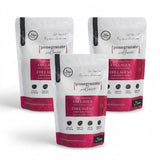
| 2 x 16oz twin pack | $112.99 | ~90 | $1.26 | $0.14 | ~$37.66 |
Servings
10oz starter pouch 28
16oz value pouch 45
2 x 16oz twin pack ~90
Larger pouches lower the cost per serving, but they only make sense if you will use the product consistently before it needs replacing. A smaller starter pouch lets you test the product for four weeks at a lower upfront cost, then move up once you know it fits your routine.
Is the Halal Premium Worth It?
The keyword question is really a comparison question: what does halal certification add to the price, and what do you get for it? The honest answer is that the premium is not uniform.
That means the value calculation depends on why you are buying. If halal sourcing is a requirement for you, the premium buys something you cannot substitute: a verified supply chain that meets your dietary standard. If it is not a requirement, a standard collagen powder may deliver similar peptides at a lower cost, and the halal premium is paying for a guarantee you do not need. Neither choice is wrong; they answer different questions.
A practical way to decide: compare the per-gram cost of the Halal-certified product against a non-halal product you would otherwise buy, then ask whether the difference is small enough that the certification is effectively free, or large enough that you are paying a distinct premium for it. Most shoppers find the gap is modest at larger pouch sizes and wider at smaller ones.
Watch out: comparing a halal product's per-serving cost against a non-halal product's per-pouch price is not a like-for-like comparison. Normalize both to cost per gram of collagen before drawing a conclusion.
What the Evidence Says About Collagen Benefits
Research on collagen supplements is still developing, and results vary between studies and between people. Many users report interest in skin, hair, nail and joint support, but the evidence does not justify strong promises for any single outcome. Treat supplement marketing with caution, including the claims made on the product page.
It helps to separate what the product contains from what it is claimed to do. Hydrolyzed collagen peptides are a source of amino acids, and the brand describes the product as supporting skin, hair, nails, joints and gut comfort. Those are product-level claims, not guaranteed results. A balanced reading of the evidence is that collagen may support some of these areas for some people, and that diet, sleep, hydration and overall health play a large role too.
Anyone with a medical condition, joint pain that persists, or questions about medication interactions should speak to a qualified health professional before starting a new supplement.
Does Collagen Supplementation Work, and What Results to Expect
Most people who try collagen for skin, hair or joints do not see changes overnight. Supplements work on a timeline of weeks, not days, so judging a product after one or two servings gives little useful information. A consistent daily routine over several weeks is a more reasonable test.
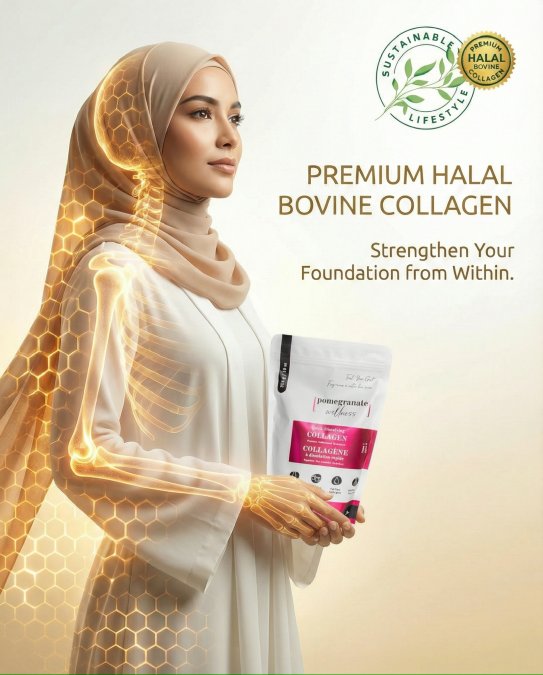
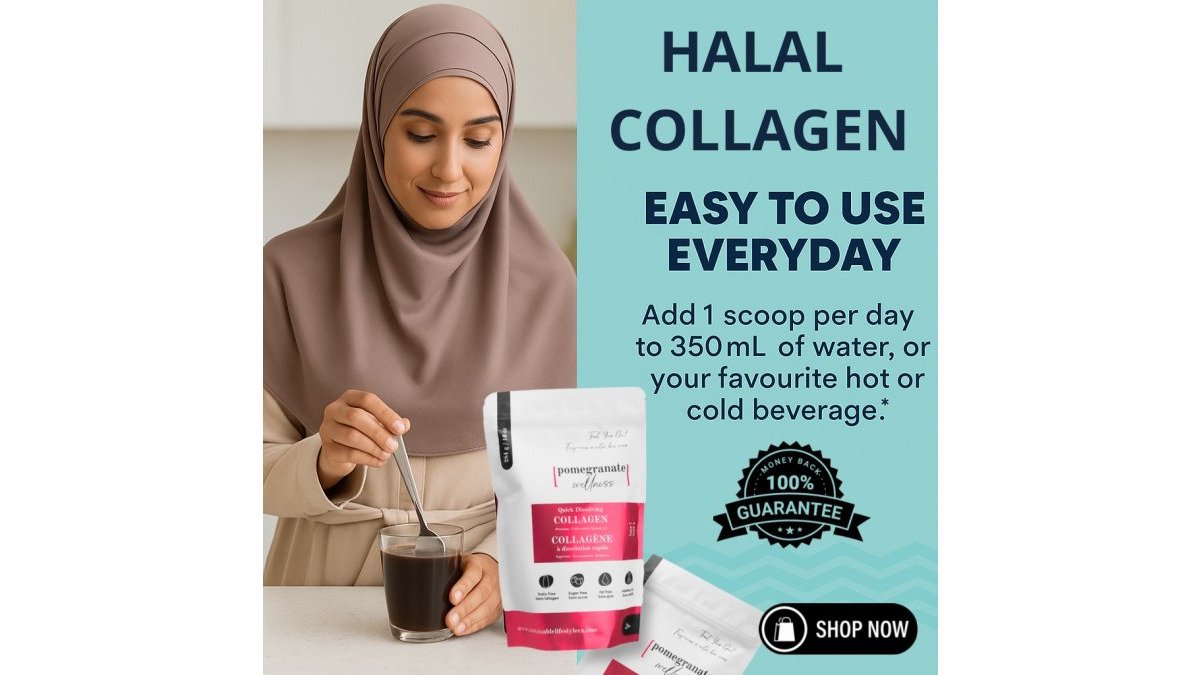
If you are starting out, follow the directions on the label and stir one level tablespoon into a drink each day. You can learn how to take our Premium Halal Bovine Collagen correctly so you get a fair trial. For a more detailed view of when changes typically appear, read How Long for Collagen Results: A 2026 Timeline Guide.
Set realistic expectations before you begin. Track how you feel over at least 8 to 12 weeks, note any changes in digestion or energy, and stop if you have a reaction. Results differ from person to person, so a friend's experience may not match yours.
Pros and Cons of Investing in Halal Collagen
Halal collagen suits buyers who need Halal-certified sourcing. This product is unflavoured so it blends into everyday drinks, and it contains no added sugar. Larger pouches also reduce the cost per serving, which helps over a long routine.
The drawbacks are real. A cheaper product may suit someone who does not need Halal certification. Because the benefits of collagen are still being studied, paying a premium is a decision about value, not a guaranteed outcome.
Consider the investment in terms of how long you plan to use it. If you intend to take collagen daily for several months, a value pouch usually makes more financial sense than repeated small purchases.
Choosing Your Halal Collagen Pouch Size
Choose a pouch size based on how long you want to commit and how much you want to spend upfront. The 10oz starter pouch suits first-time buyers who want to see whether the product fits their routine. Its 28 servings give you a four-week trial.
If you already know you will keep taking it, the Halal Bovine Collagen Peptides Powder 16oz (454g) Value Upgrade Pouch offers 45 servings at a lower cost per serving. For households or long-term users, the Halal Grass-Fed Bovine Collagen Powder Twin Pack - 2 x 16oz (454g) brings the per-serving cost down further and reduces how often you need to reorder.
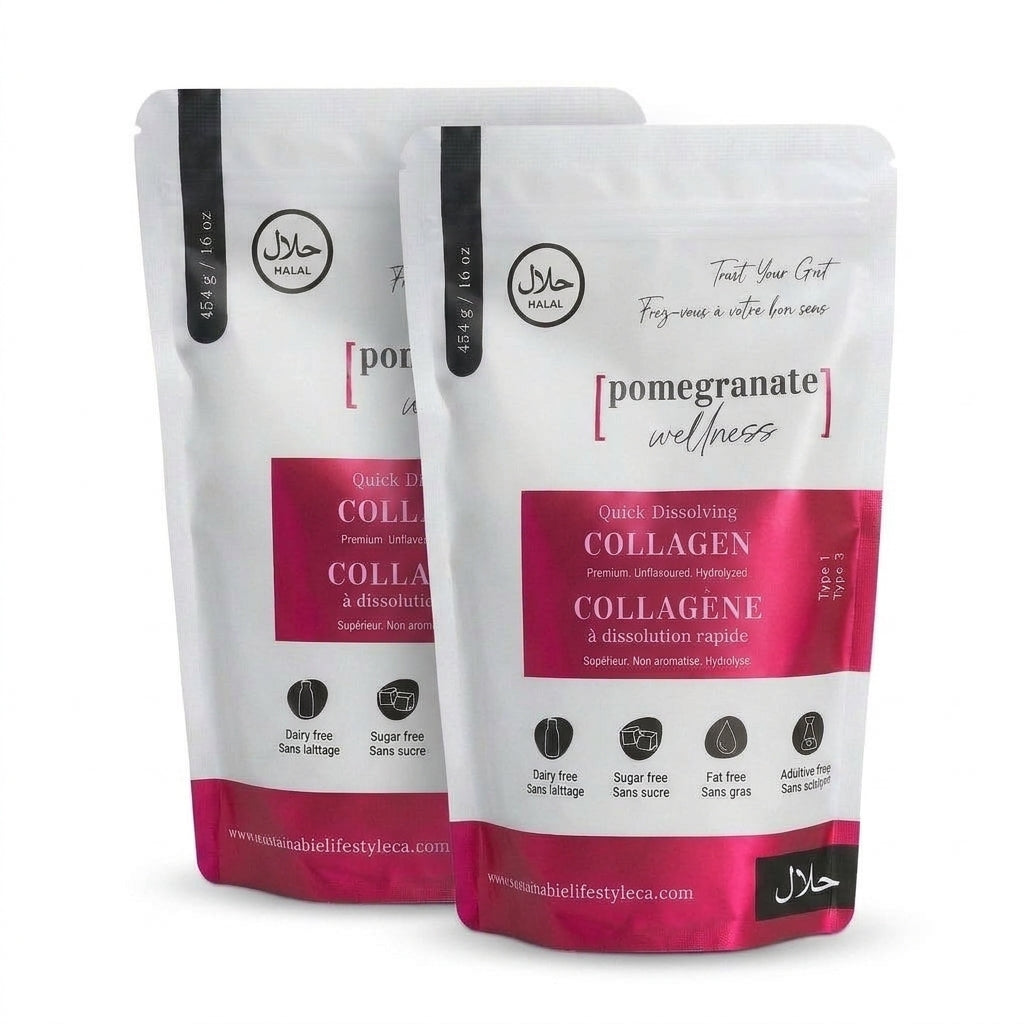
Start small if you are unsure, and move to a larger pouch once you know the product suits you.
Frequently Asked Questions
Is halal collagen more expensive than regular collagen?
Often, yes. Halal collagen can carry a higher sticker price than standard collagen powders. The fair way to compare is cost per serving, not the price of the pouch. For example, the Sustainable Lifestyle 10oz Starter Pouch at $39.99 provides 28 servings, which works out to about $1.43 per serving. Compare that same figure against any other collagen powder, and check that both products list the same serving size and grams of collagen per serving.
How can you verify that collagen is Halal-certified?
Look for the name of the certifying body printed on the label, then check that body's website or contact them directly to confirm the certificate is current and covers the specific product and facility. Ask whether the cattle were hand-slaughtered according to Zabiha standards and whether the certificate covers the full supply chain, not just the final packaging. A brand that is transparent about its certifier and sourcing will answer these questions without hesitation. Sustainable Lifestyle products are certified Zabiha Halal and labelled as Halal-certified.
What should I look for when buying halal collagen powder?
Check the ingredient list first. A single-ingredient product of hydrolyzed bovine collagen peptides, with no added sugar, fillers or flavouring, is the simplest option to compare. Confirm the Halal certification and the certifying body, note whether the cattle are grass-fed and pasture-raised, and calculate the cost per serving using the grams of protein per serving. Unflavoured powders also mix into coffee, tea or water without changing taste, which matters if you plan to use them daily.
Does collagen supplementation work?
The research on collagen supplements is still developing, and results vary between people. Expect consistency over weeks rather than days, and treat any supplement as one part of a balanced diet. If you have a joint or skin condition, speak with a health professional before starting, and remember that these statements have not been evaluated by health authorities.