Cart
0
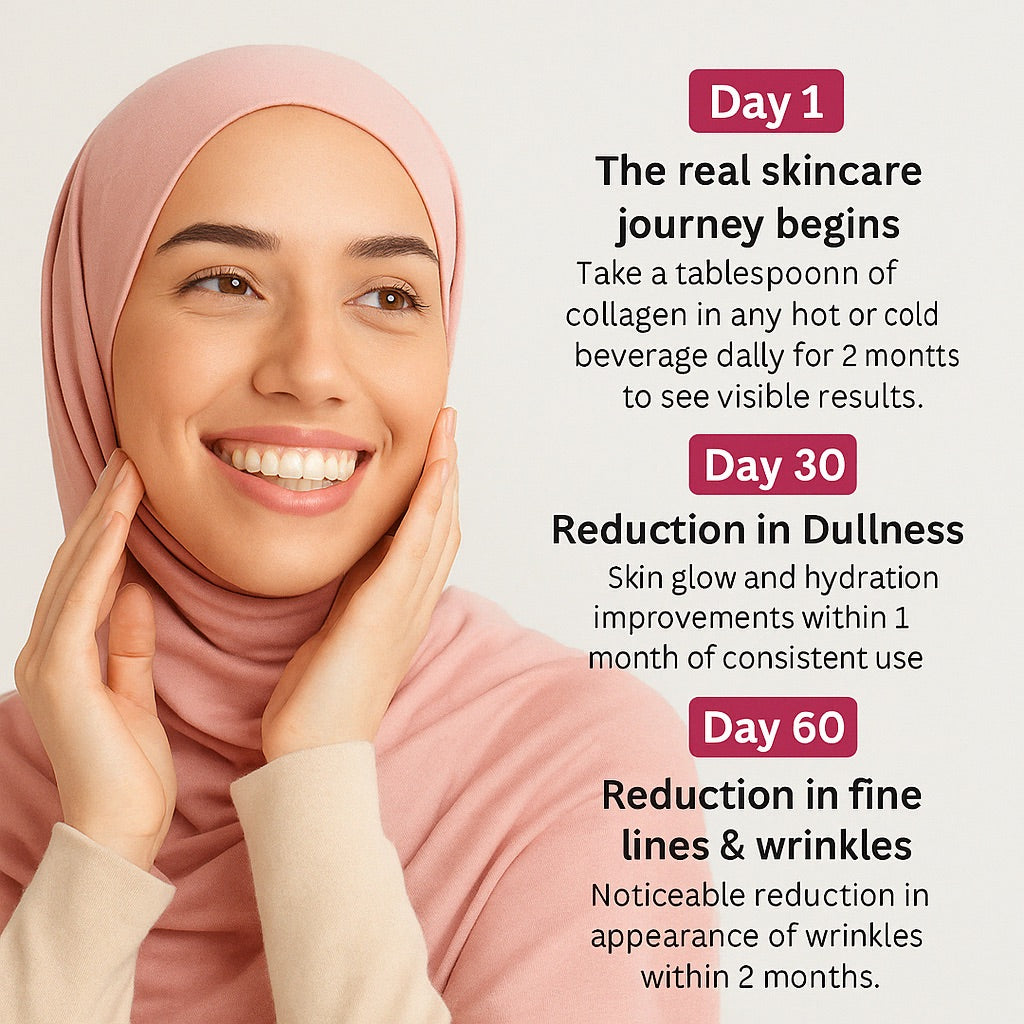
Table of Contents
- What Halal Collagen Is and Why the Source Matters
- How Collagen Supports Skin Elasticity and Dermal Hydration
- Hydrolyzed Collagen Peptides, Molecular Weight and Bioavailability
- How to Verify Halal Collagen Certification Before You Buy
- Best Practices for Taking Collagen Powder Each Day
- Joint, Bone and Gut Support Alongside Skin Benefits
- Choosing a Clean-Label Halal Collagen Powder
- Frequently Asked Questions
Last Updated: September 16, 2026
What Halal Collagen Is and Why the Source Matters
Halal collagen for skin health starts with one question: where did the collagen come from, and how was it processed? Halal collagen is extracted from permissible sources and produced according to Islamic dietary law, with no pork-derived gelatin, no alcohol-based processing aids, and no cross-contamination with non-halal materials. For Muslim consumers, that distinction matters as much as effectiveness.

Bovine vs. Marine Collagen: Which Suits Your Routine
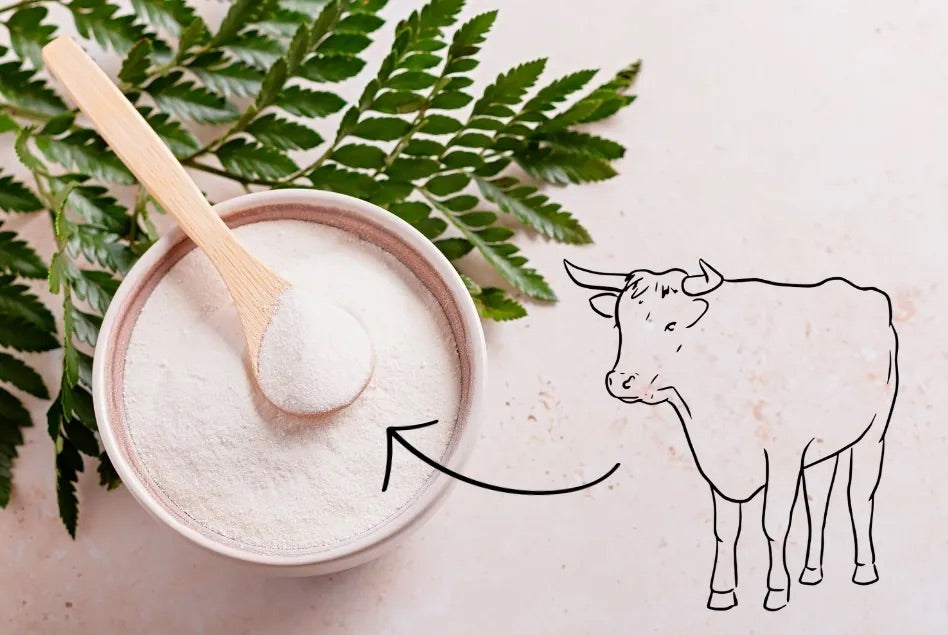
Bovine collagen comes from cattle hides and bones and typically contains both Type 1 and Type 3 collagen. Marine collagen comes from fish skin and scales and is almost entirely Type 1. Both are hydrolyzed into peptides for absorption, but differ in practice:
- Bovine collagen: Higher in Type 1 and Type 3, neutral taste once unflavored, widely available in powder form.
- Marine collagen: Smaller peptides on average, often marketed for skin, but can carry a faint odor and tends to cost more per serving.
How Collagen Supports Skin Elasticity and Dermal Hydration
Collagen supports skin elasticity and dermal hydration by supplying the amino acids your body uses to rebuild the connective tissue that keeps skin firm and moisturized. As production slows, skin loses structural support, and fine lines and dryness become more visible.
Type 1 and Type 3 Collagen: The Skin-Relevant Types
Type 1 collagen is the most abundant form in the body and the primary structural component of skin, tendons, and bone. Type 3 works alongside it, supporting skin elasticity and early wound healing. Bovine collagen naturally contains both, making it a practical choice for skin health.
Key Takeaway
For skin-focused routines, look for a collagen source that provides both Type 1 and Type 3. Bovine collagen delivers both naturally; marine is mostly Type 1 only.
Hydrolyzed Collagen Peptides, Molecular Weight and Bioavailability
Hydrolyzed collagen peptides are collagen proteins broken into smaller fragments, called peptides, making them easier to absorb. Molecular weight determines how well that absorption works, and it's the most technical spec worth checking on a label.
How to Verify Halal Collagen Certification Before You Buy
Verifying halal collagen certification means checking that a recognized certifying body audited the product, not just that the packaging carries a halal symbol. Anyone can print a crescent moon on a label. Certification is a documented process, and knowing what it requires separates a genuine claim from a decorative one.
What Halal Certification Actually Requires
Halal certification for a collagen product rests on three pillars, and a credible certifier audits all three:
- The source animal and its slaughter. For bovine collagen, cattle must be slaughtered according to Islamic requirements, a swift, single cut severing the windpipe, esophagus, and major blood vessels while the animal is alive, with the name of God invoked at slaughter. The animal must also be permissible in itself (cattle and fish are; pigs are not). Stunning is disputed among certifiers: some accept reversible stunning, others require full consciousness. A certifier's published standard states its position, and that transparency is itself a quality signal.
- Supply-chain segregation. Halal status is fragile. A halal-certified hide processed on equipment that also handles porcine material, or stored in a shared container, can lose its status through cross-contact. Certifiers audit the full chain, receiving, processing, packaging, storage, and transport, and require documented cleaning or dedicated lines between halal and non-halal production.
- Processing aids and additives. Collagen extraction can involve enzymes, acids, or filtration media. A halal audit confirms none are alcohol-based or derived from non-halal animals, and that incidental ingredients like anti-caking agents are permissible too.
Certifier Standards Vary, and That Matters
There is no single global halal authority. Certifying bodies operate under different standards, and a certificate accepted in one market may not be recognized in another. When checking a product, look for the certifier's name, then look up its published standard. A body that publishes its slaughter requirements, audit frequency, and supply-chain rules is doing the work; one that issues a logo with no accessible standard is not.
A Practical Verification Checklist
- Identify the certifying body by name. Look for a specific organization, not a generic "halal" stamp. Reputable certifiers publish standards and maintain searchable lists of certified products.
- Check the certification scope. A certificate should cover the specific product and facility, not just general company operations.
- Confirm the source animal and slaughter method. Certification should specify bovine, marine, or other, and confirm slaughter meets Islamic requirements.
- Look for cross-contamination controls. The facility should separate halal production from non-halal lines.
- Check the validity date. Certificates expire and require renewal audits. An expired certificate is not certification.
- Ask for documentation directly. A brand confident in its certification will share the certificate on request.
Watch Out
A halal claim without a named certifying body is marketing, not certification. If a brand can't tell you who audited the product, what standard they applied, and when the audit was renewed, treat the label as unverified.
Why This Builds Trust Beyond the Label
The same discipline that makes a product halal, traceable sourcing, documented processing, third-party audit, tends to produce a cleaner product overall. A facility that can account for every step of its supply chain can usually also tell you the animal's origin and diet. That's why halal certification often correlates with the grass-fed, pasture-raised sourcing collagen buyers look for anyway.
Best Practices for Taking Collagen Powder Each Day
Best practices for taking collagen powder come down to consistency, dose, and timing. Collagen isn't a take-once supplement; it works through steady daily intake that keeps amino acids available for collagen synthesis.
How Much Collagen Per Day
Most collagen powders are dosed at roughly 10 grams per serving, and daily use is the norm. A common pattern is 10 to 15 grams per day for general skin and joint support, taken as a single serving. Some split it into two smaller servings, but there's no strong evidence that beats one daily dose. Hitting the same amount every day matters more than occasional large doses.
Timing: Does It Matter?
Timing is flexible. Some prefer morning coffee, others an evening smoothie. What matters is picking a time you'll stick to. Two practical notes:
- With or without food both work. Collagen peptides are absorbed efficiently either way, so no need to take them on an empty stomach.
- Pair with vitamin C. Vitamin C supports normal collagen formation, so taking your collagen alongside citrus, berries, bell peppers, or a supplement is a sensible pairing with a clear rationale.
Building the Habit
A few practical habits that make the routine easier:
- Dissolve it in something you already drink daily. Coffee, tea, or a smoothie removes the need for a separate step.
- Choose unflavored powder if you don't want taste changes. Unflavored, odorless collagen dissolves without altering the drink.
- Stay consistent for at least 8 to 12 weeks. Skin and hair changes are gradual and build over time.
- Keep the scoop with the pouch. A measuring scoop that lives with the product removes friction from the daily routine.
What to Expect and When
Collagen is not fast-acting. A common pattern: joint comfort is noticed first, often within the first month of consistent use, while skin changes, improved hydration, a slightly firmer feel, appear over 8 to 12 weeks. Hair and nail changes take longer because those structures grow slowly. Setting expectations around weeks rather than days keeps most people consistent long enough to see results.
Pro Tip
If you're new to collagen, start with a smaller pouch to confirm you like the routine before committing to a larger supply. Consistency matters more than buying in bulk on day one.
Joint, Bone and Gut Support Alongside Skin Benefits
Collagen's benefits extend past skin. The same amino acid profile that supports dermal health also contributes to joint flexibility, cartilage maintenance, and bone strength. Glycine and proline, collagen's two dominant amino acids, are key components of connective tissue throughout the body.
Choosing a Clean-Label Halal Collagen Powder
Choosing a clean-label halal collagen powder means prioritizing what's in the scoop, not on the front of the pouch. A short ingredient list, a verified source, and genuine certification separate quality products from the rest.

| Feature | What to Look For | Why It Matters |
|---|---|---|
| Source | Grass-fed bovine or wild-caught marine | Cleaner raw material, better traceability |
| Certification | Named halal certifying body | Verifiable, audited compliance |
| Types | Type 1 and Type 3 | Broader skin and joint support |
| Processing | Hydrolyzed peptides | Better absorption |
| Additives | None, unflavored | Avoids sugar, fillers, and flavorings |
| Diet fit | Gluten-free, dairy-free, sugar-free | Works with keto, paleo, and clean diets |
Frequently Asked Questions
Which halal collagen is best for skin?
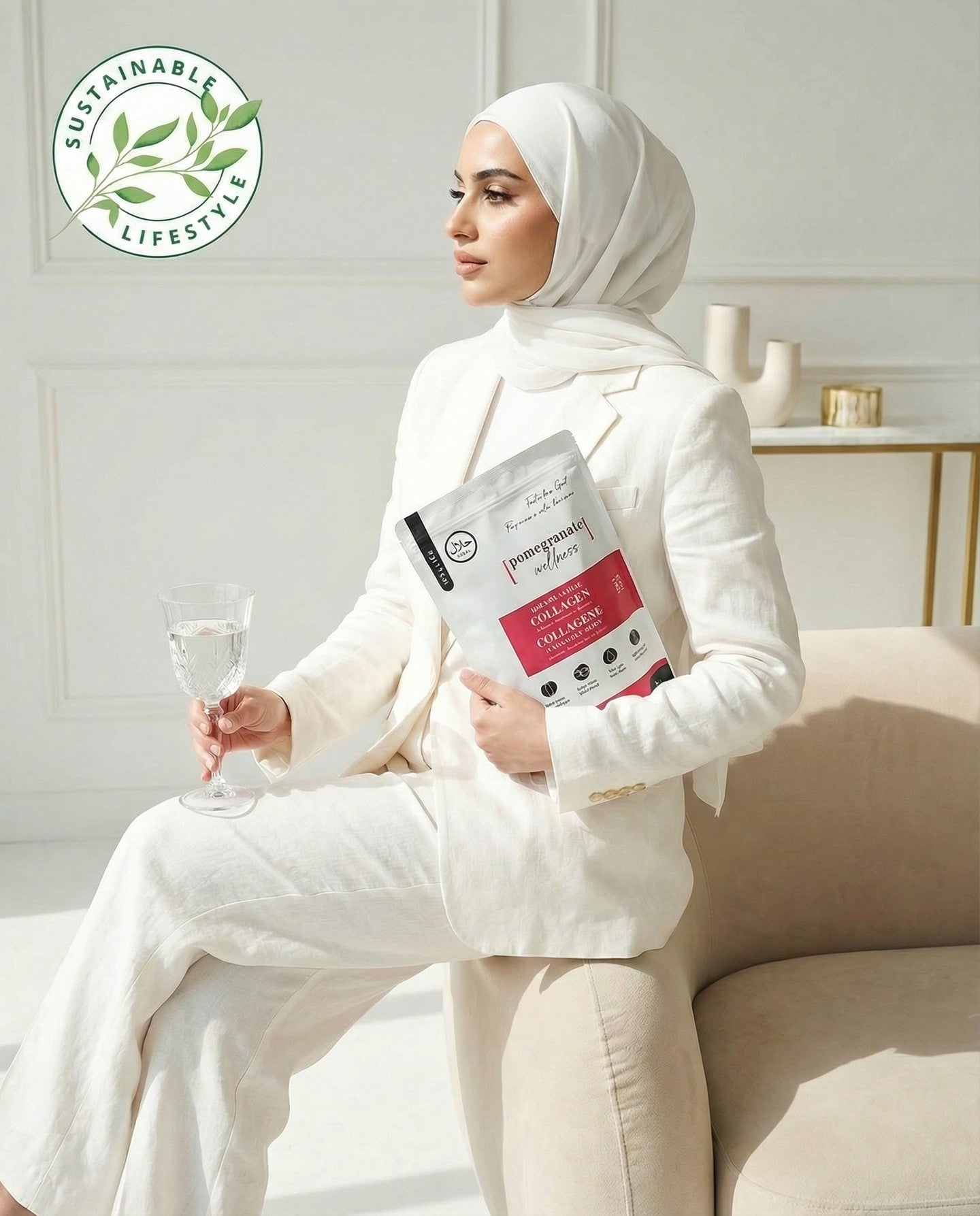
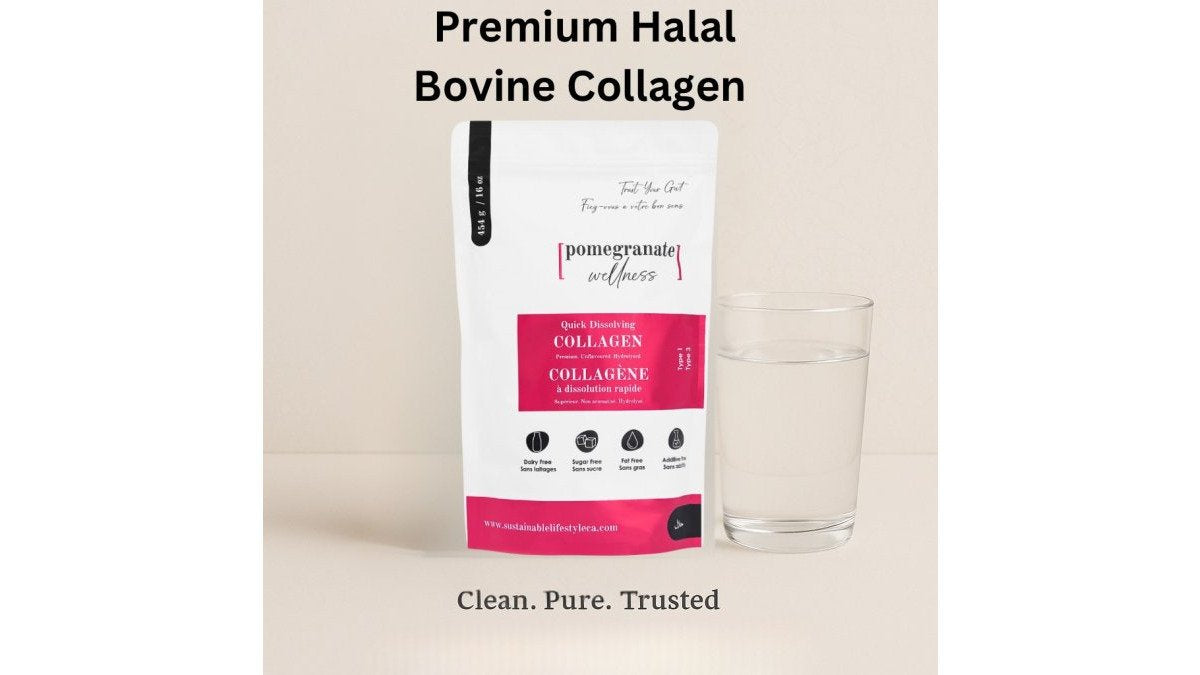
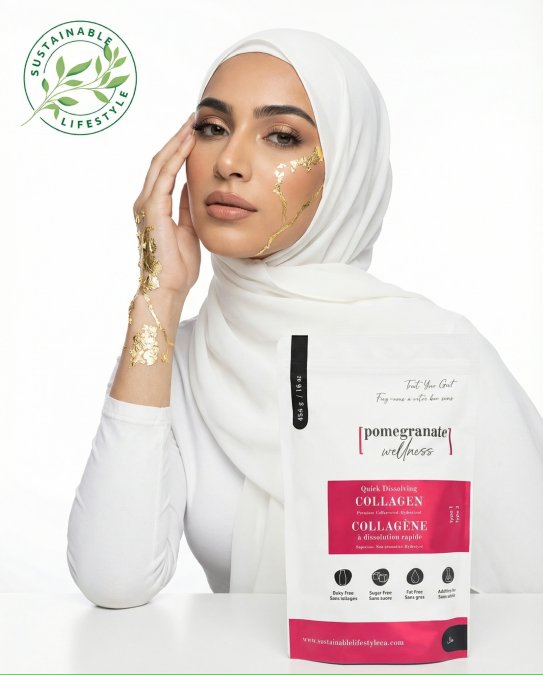
Look for hydrolyzed halal collagen peptides from grass-fed bovine, since Type 1 and Type 3 dominate skin, hair and nail tissue. The powder should be unflavored, odorless and free of sugar, gluten, dairy and preservatives so it mixes into coffee, tea or smoothies without changing taste. Certification matters too: a Halal-certified product confirms the cattle were slaughtered according to Islamic law and that no non-Halal processing aids were used. Sustainable Lifestyle's Starter Pouch delivers 28 servings at 10oz (284g), and the On-the-Go Pocket Sticks suit travel days.
What are the 5 signs that collagen is working?
Most people notice changes in this rough order: skin feels more hydrated within a few weeks, fine lines around the eyes look softer, nails grow stronger and break less, hair shedding slows, and joint stiffness after exercise eases. Results depend on dose, consistency and how much collagen your diet already supplies. Because collagen is not a quick fix, track one or two markers, such as nail strength or how your skin feels after cleansing, rather than judging everything at once. Give it at least eight to twelve weeks of daily use before deciding.
Does halal collagen really work?
Hydrolyzed collagen peptides are small enough to be absorbed, and research on collagen supplementation links them to improved skin elasticity and dermal hydration over several weeks. The Halal status of a product does not change how well it works; it only confirms the sourcing and processing comply with Islamic law. What affects results is dose, molecular weight, consistency and your overall diet. A grass-fed, unflavored bovine collagen taken daily at a consistent amount gives your body the amino acid profile it needs for collagen synthesis.
Is grass-fed bovine collagen better for skin health?
Grass-fed sourcing is mainly a quality and ethics marker rather than a guarantee of stronger skin results. Pasture-raised cattle typically produce collagen with a consistent amino acid profile, and grass-fed claims are easier to audit when the brand also holds Halal certification and publishes its sourcing standards. Bovine collagen supplies Type 1 and Type 3, the types most associated with skin elasticity, connective tissue and joint flexibility. If you also want to avoid additives, check that the label lists collagen as the only ingredient.
Building a skin, joint, and gut routine that respects your faith shouldn't require guesswork or compromise. Sustainable Lifestyle offers halal-certified, grass-fed bovine collagen that's unflavored, odorless, and dissolves cleanly into any drink, backed by Canadian-made quality and no border fees for Canadian customers. Get started with Sustainable Lifestyle and make your daily collagen scoop the easiest part of your wellness routine.