Cart
0
Table of Contents
- What Clean Label Collagen Without Hidden Fillers Really Means
- The Most Common Hidden Fillers in Collagen Powders
- How to Read Collagen Supplement Labels Like a Formulator
- Collagen Supplement Side Effects: What Additives Cause and What Pure Collagen Doesn't
- Grass-Fed, Halal-Certified, and Third-Party Tested: What Each Claim Actually Proves
- Clean Label Collagen Without Hidden Fillers: Picking the Right Format and Size
- Conclusion
- Frequently Asked Questions
Last Updated: September 16, 2026
What Clean Label Collagen Without Hidden Fillers Really Means
Clean label collagen without hidden fillers is a collagen powder whose ingredient panel lists collagen peptides and nothing else, with no sweeteners, anti-caking agents, or flavor systems added to bulk up the scoop. That definition sounds simple. In practice, very few products meet it.
Here's what most guides get wrong: they treat "clean label" as a marketing tier, somewhere between budget and premium. It isn't. It's a binary. Either the panel lists one ingredient or it doesn't.
That distinction matters more than ever, because collagen has quietly become one of the most adulterated categories in the supplement aisle. The powder is expensive to produce, easy to dilute, and almost impossible for a shopper to verify by taste. Which is exactly why you need to know what's hiding in there.
The Most Common Hidden Fillers in Collagen Powders
The most common hidden fillers in collagen powders are maltodextrin, dextrose, natural flavors, silicon dioxide, and magnesium stearate, all of which can appear under names that sound harmless or technical. None of them are collagen. All of them take up space in your scoop.
Maltodextrin, Sweeteners, and Anti-Caking Agents
Maltodextrin is the big one. It's a cheap starch-derived powder that bulks up a serving, dissolves clear, and tastes like almost nothing. On a label it looks innocuous. In your body it behaves like sugar, spiking blood glucose faster than table sugar in some cases.
Then there's the sweetener layer. Flavored collagen almost always carries something: stevia, monk fruit, sucralose, or a "natural flavor" blend that legally doesn't have to disclose its components. Anti-caking agents like silicon dioxide keep the powder from clumping on the shelf, and while they're generally recognized as safe in small amounts, they're still not collagen.
Artificial additives aren't automatically dangerous. The problem is cumulative and invisible. You're paying collagen prices for filler weight.
Watch Out
A 20g scoop that contains 12g of collagen and 8g of maltodextrin, sweetener, and flavoring is a 40% markup on nothing. Multiply that across a year of daily use and you've bought a lot of starch.
Proprietary Blends and Labeling Loopholes
A proprietary blend lets a manufacturer list ingredients as a group with a single total weight, without disclosing how much of each one is inside. That's the loophole. You might see "Collagen Complex Blend... 10g" and assume you're getting 10g of collagen. You could be getting 6g of collagen and 4g of maltodextrin.
Labeling rules in most markets require ingredients to be listed in descending order by weight, but they don't require a proprietary blend to break out individual amounts. That gap is where dilution hides.
The fix is straightforward: buy products that state the collagen amount per serving as a standalone line item. If the number is buried inside a blend, treat it as unknown.
How to Read Collagen Supplement Labels Like a Formulator
Reading a collagen label like a formulator means checking five things in order: the ingredient list, the grams of collagen per serving, the source and type, the serving size itself, and the testing documentation behind the batch. Most shoppers stop at step one. That's where the mistakes happen.
Start with the ingredient panel. If it lists anything beyond collagen peptides, ask what that ingredient is doing there. Sometimes there's a legitimate answer. Often there isn't.
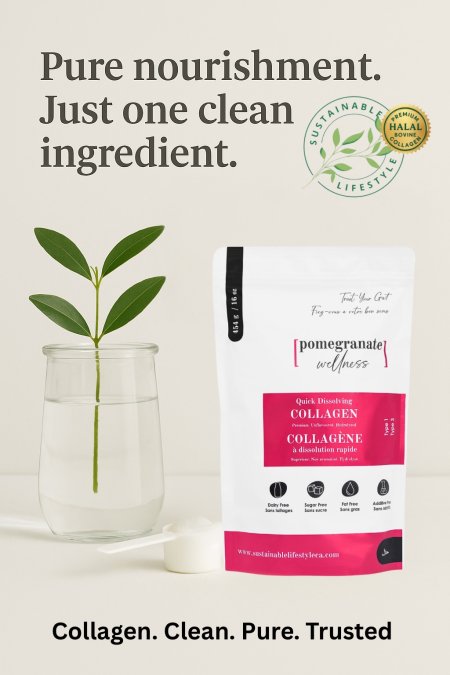
Next, find the collagen grams per serving. A product that says "10g of collagen" on the front should say the same thing on the back, as its own line. If it doesn't, that's your answer.
Then check the source. Bovine collagen comes from cattle; marine collagen comes from fish. Hydrolyzed collagen peptides are simply collagen broken into smaller chains so they dissolve and absorb more readily. Neither type is inherently cleaner than the other, but the sourcing behind them varies enormously.

The Serving-Size Trick
Before you compare two products, check the serving size. A powder that lists 20g of collagen per serving but recommends a 40g scoop is delivering 20g of something else. Some brands shrink the scoop to make the collagen number look competitive, then pad the rest with maltodextrin or flavoring. Always compare cost per gram of actual collagen, not cost per tub.
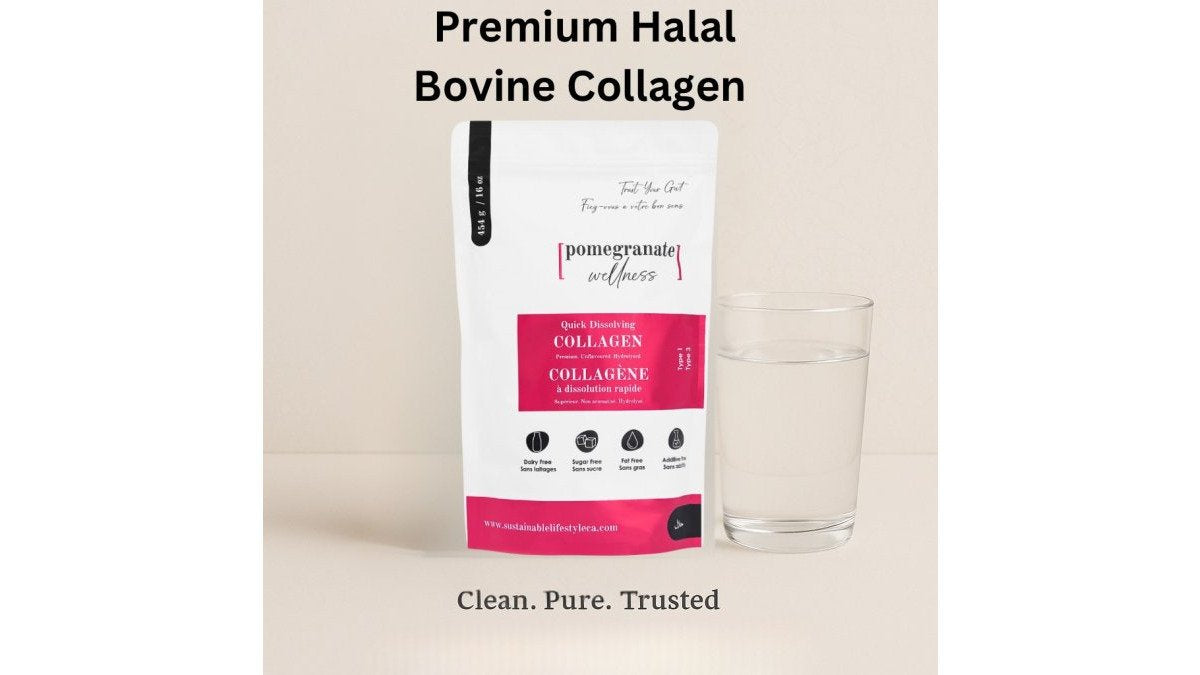
Starter Pouch : Unflavoured Halal →
Labeling Loopholes That Hide Fillers Legally
This is the part most guides skip. Under Canadian food labeling rules, ingredients must be listed in descending order by weight, but several legal categories let a manufacturer avoid naming what's really inside.
"Natural flavors" is a catch-all term.
Pro Tip
Photograph the back label of any collagen you're considering and compare it side by side with a single-ingredient product. The difference in line count is usually the whole story.
Collagen Supplement Side Effects: What Additives Cause and What Pure Collagen Doesn't
Pro Tip
If a flavored collagen upset your stomach, don't assume collagen is the problem. Switch to an unflavored, single-ingredient powder for two weeks and see whether the symptoms follow the additives or the protein.
The practical takeaway: side effects are usually a formulation signal, not a collagen verdict.
Grass-Fed, Halal-Certified, and Third-Party Tested: What Each Claim Actually Proves
Each of these three claims proves something different, and none of them proves everything. Understanding the boundaries keeps you from over-trusting a label.
Why Heavy Metals Show Up in Collagen at All
Collagen is derived from animal tissue, hide, bone, and connective tissue. Those tissues accumulate minerals over an animal's lifetime from feed, water, and soil. Arsenic, cadmium, lead, and mercury are the four that regulators and labs watch most closely. A cow grazing on contaminated pasture or drinking from an industrial water source will concentrate those elements in its tissue, and processing doesn't remove them.
Batch-Specific Testing: The Verification Step Most Buyers Skip
Here's the gap most buyers never hear about: a brand can test one lot, publish the result, and ship a different lot for years. Purity isn't a brand property; it's a batch property.
Bioavailability vs. Purity
That's also where bioavailability and purity get confused. Bioavailability describes how much of the collagen your body actually absorbs, it's a function of peptide chain length and processing method. Purity describes what else is in the scoop. A highly absorbable powder full of maltodextrin is still a diluted product. You can have one without the other, which is why the two claims should never be treated as interchangeable.
Key Takeaway
Grass-fed, Halal-certified, and third-party tested are three separate claims answering three separate questions. A product can carry one and fail the others. The only claim that verifies what's actually in your pouch is a batch-specific CoA that matches your lot number.
Clean Label Collagen Without Hidden Fillers: Picking the Right Format and Size
Format and size decide whether you actually stick with the routine, which matters more than any single label claim. The cleanest powder in the world does nothing if it sits unopened in a cupboard.
| Format | Servings | Best For | Why It Works |
|---|---|---|---|
| 10oz pouch | 28 | Testing a daily routine | Low commitment, resealable |
| 16oz pouch | 45 | Established home routine | Better cost per serving |
| Hybrid Kit | 65 | Home plus travel | Pouch and single-serve sticks together |
| Bundle packs | 56-135 | Families and bulk buyers | Lowest cost per serving |
Conclusion
The supplement aisle rewards confusion. Filler-heavy powders hide behind proprietary blends, and "halal" without a certifying body behind it means very little. Reading the panel is the only reliable filter.
Frequently Asked Questions
What are common hidden fillers in collagen supplements?
The fillers that show up most often are maltodextrin, artificial sweeteners like sucralose and aspartame, anti-caking agents such as silicon dioxide, and natural or artificial flavors used to mask the taste of lower-grade collagen. Some products also hide doses inside proprietary blends, which let a brand list a total gram amount without breaking down each ingredient. A clean label collagen without hidden fillers lists one ingredient: hydrolyzed collagen peptides. Anything else on the panel is there for manufacturing or flavor reasons, not for your benefit.
How can I tell if my collagen powder is clean label?
Start with the ingredient list. If it reads 'hydrolyzed bovine collagen peptides' and nothing else, it is clean label. Next, check whether the brand states its third-party testing for heavy metals like lead, arsenic, cadmium, and mercury. Look for unflavored and odorless products, since flavoring systems almost always introduce additives. Finally, confirm the sourcing claim (grass-fed bovine) and any certification such as Halal-certified. A short ingredient list plus published testing and clear sourcing is the strongest signal you can get before buying.
Are there side effects to collagen supplements with additives?
Most collagen supplement side effects reported by users, such as bloating, gas, or mild stomach upset, trace back to the additives rather than the collagen itself. Sugar alcohols, artificial sweeteners, and maltodextrin are common culprits for digestive discomfort. Heavy metal contamination is a separate concern, which is why contaminant screening matters. Pure, unflavored collagen peptides are generally well tolerated and easy to digest, so if a product upsets your stomach, the filler list is the first place to look.
Is Halal-certified collagen always clean label?
No. Halal certification confirms the source and processing comply with Islamic dietary law, but it does not guarantee the absence of fillers. A Halal-certified powder can still contain maltodextrin, artificial sweeteners, or flavoring agents. You need to check the ingredient panel separately. The strongest products carry both: Halal certification for faith compliance and a single-ingredient formula with third-party testing for purity. Look for both claims before you commit to a tub.
Why should I avoid artificial sweeteners in collagen?
Artificial sweeteners are added to mask the taste of collagen that has been flavored or diluted, and they serve no nutritional purpose in a supplement. For some people they trigger bloating, headaches, or digestive upset. They also make it harder to add collagen to coffee, tea, or soup without changing the taste of your food. An unflavored, odorless collagen powder dissolves into any hot or cold beverage without altering flavor, which means there is no reason to add sweeteners in the first place.