Cart
0
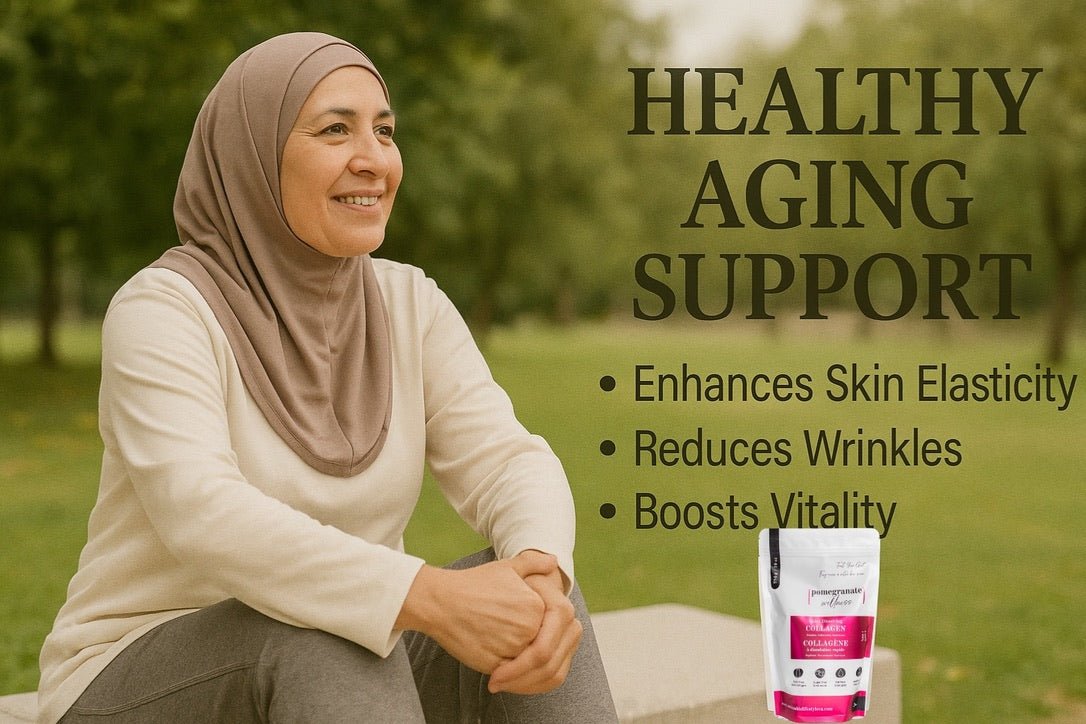
The Science of Youth: Understanding Collagen Loss and the Power of Peptides
If you have ever wondered what actually holds your body together, the answer is collagen. Often described as the body's "scaffolding" or "glue," collagen is the most abundant protein in the human body, accounting for about 30% of its total protein. It is responsible for the firmness of your skin, the flexibility of your joints, and the strength of your bones.
But there is a catch: this vital resource is not infinite.
Most of us have a specific moment when we realize something has changed. Maybe it is a glance in the rearview mirror revealing fine lines that weren't there a year ago, or perhaps it is the morning stiffness in your knees that lingers a little longer than it used to. These aren't just random symptoms of getting older; they are biological signals that your collagen production is slowing down.
While aging is inevitable, the rate at which we age—and how we feel while doing it—is largely within our control. The emergence of collagen peptides as a scientifically backed supplement has changed the conversation around healthy aging. It is no longer just about creams and topical treatments; it is about rebuilding from the inside out.
In this comprehensive guide, we will explore the biological timeline of collagen loss, the lifestyle factors that accelerate it, and how collagen peptides can serve as a powerful tool to restore vitality to your skin, joints, and overall health.
The Silent Decline: Understanding Collagen Loss Through the Decades
To understand why we need to supplement collagen, we first need to understand the "bank account" we start with and how we spend it. Think of collagen as a savings account that yields high interest during your youth. In your early 20s, your body produces collagen efficiently and in abundance. Your skin is plump, your joints recover quickly from impact, and your bones are dense.
However, the biological reality of collagen loss begins much earlier than most people realize. Starting in your mid-20s, your body's natural collagen production begins to decline by approximately 1% per year. This is a silent process; you won't see the effects immediately. It is the cumulative result of your body breaking down more collagen than it can synthesize.
The Acceleration Phase
By the time you reach your 40s, the collagen loss accelerates significantly. The internal scaffolding that supports your epidermis begins to weaken, leading to the formation of visible wrinkles and sagging skin. This is also when many people begin to notice that their joints "click" or ache after exercise, a sign that the collagen-rich cartilage cushioning their bones is thinning.
The Menopause Cliff
For women, the most dramatic shift occurs during menopause. Research indicates that women can lose up to 30% of their skin collagen in the first five years of menopause. This rapid decline is due to the drop in estrogen, a hormone that plays a critical role in collagen synthesis. This period often correlates with a sudden increase in skin dryness, deep wrinkling, and a higher risk of injuries related to connective tissue weakness.
It is important to distinguish between the visible and invisible signs of this decline. While we often focus on the aesthetic symptoms—like crepey skin or brittle nails—the internal impact is just as profound. Tendons and ligaments become less elastic, making them more prone to tears, and bone density decreases, raising the risk of fractures. Understanding this timeline isn't about fear; it is about recognizing that collagen maintenance is a lifelong health strategy, not just a beauty fix.
More Than Just Time: Lifestyle Enemies of Your Collagen
While the chronological clock is ticking for everyone, "intrinsic aging" (natural aging) is only half the story. A significant portion of collagen damage is caused by "extrinsic aging"—external factors that we can control. These lifestyle enemies act as accelerants, speeding up the breakdown of your collagen matrix effectively making you age faster than your biology intended.
1. Sugar and Glycation
One of the most potent enemies of collagen is dietary sugar. When you consume excess sugar, it attaches to proteins in your bloodstream in a process called glycation. This forms harmful new molecules called Advanced Glycation End-products (appropriately acronymed AGEs). These AGEs latch onto collagen fibers, causing them to become stiff, brittle, and malformed. Instead of a flexible, resilient mesh, your collagen becomes rigid, leading to skin that cracks and sags rather than bouncing back.
2. UV Radiation (Photoaging)
Sun exposure is responsible for up to 80% of visible facial aging. UV rays penetrate deep into the dermis, where they damage the collagen fibers and cause an abnormal accumulation of elastin. The body produces enzymes called metalloproteinases to repair this damage, but these enzymes can malfunction and break down healthy collagen instead. This results in "solar elastosis," the leathery, deep-wrinkled texture seen in chronic sun exposure.
3. Smoking and Oxidative Stress
Smoking is like a wrecking ball for your skin's structural integrity. It reduces blood flow to the skin, starving it of oxygen and nutrients. Furthermore, the chemicals in tobacco smoke destroy collagen and elastin. This is why smokers often develop "smoker's lines" around the mouth and have a grayish, lackluster complexion years earlier than non-smokers.
4. The Stress Connection
Chronic stress triggers the release of cortisol, the body's primary stress hormone. High levels of cortisol have been shown to degrade collagen and inhibit the body's ability to produce it. In a high-stress state, the body prioritizes immediate survival functions over long-term repair processes like skin and joint maintenance. Managing stress is, quite literally, anti-aging therapy.
The Solution: What Are Collagen Peptides and How Do They Work?
If eating an entire steak doesn't instantly improve your skin, why would a supplement work? This is a common and valid question. The answer lies in the molecular size and processing of the collagen.
The Science of Hydrolysis
In its native state (like in gristle or bone broth), collagen is a massive, complex triple-helix molecule. It is too large for your intestinal tract to absorb effectively. To make it useful for the body, scientists use a process called hydrolysis. This enzymatic process breaks the long collagen chains down into tiny, short chains of amino acids called peptides.
Bioavailability: Why Size Matters
Collagen peptides have a low molecular weight (measured in Daltons), which makes them highly bioavailable. This means they can easily pass through the intestinal wall and enter the bloodstream.
The "Messenger" Effect
Once these peptides are in your system, they do two remarkable things:
- Building Blocks: They provide the specific amino acids (glycine, proline, and hydroxyproline) that act as the raw material for building new collagen.
- Cell Signaling: This is the game-changer. The presence of these specific peptides in your blood tricks your body into thinking it is experiencing rapid collagen breakdown. This acts as a false alarm that stimulates your fibroblasts (the cells responsible for making collagen) to kick into high gear and produce more of your own natural collagen.
So, you aren't just replacing lost collagen; you are waking up the cellular machinery that has grown sluggish with age.
Beyond Beauty: The Full Spectrum of Benefits
While smooth skin is the most marketed benefit, the impact of collagen peptides extends far deeper. Clinical research has validated a wide spectrum of health benefits that improve quality of life.
Skin Health: Validated by Science
Multiple double-blind, placebo-controlled studies have demonstrated the efficacy of collagen peptides for skin. Participants taking 2.5g to 10g of hydrolyzed collagen daily have shown measurable improvements in skin elasticity, hydration levels, and dermal collagen density. Results are typically seen within 4 to 8 weeks, with reductions in eye wrinkle volume and improved wound healing capability.
Joint Relief and Mobility
For those suffering from osteoarthritis or activity-related joint pain, collagen is a powerhouse. Research suggests that collagen peptides can accumulate in cartilage and stimulate the production of the extracellular matrix. Studies involving athletes have shown that collagen supplementation can significantly reduce joint pain during activity, likely by repairing micro-damage in tendons and ligaments.
Bone Density Defense
Bones are primarily made of collagen, which gives them structure and keeps them from being brittle. As collagen deteriorates with age, bone mass decreases. Studies indicate that taking collagen supplements may have an anabolic effect on bone tissue, potentially inhibiting the bone breakdown that leads to osteoporosis and osteopenia.
Gut Health and Muscle Mass
Emerging research links collagen to gut health. The amino acid glycine, abundant in collagen, helps maintain the integrity of the gut lining, potentially aiding those with "leaky gut" syndrome. Additionally, for older adults experiencing sarcopenia (muscle loss), combining collagen with resistance training has been shown to improve muscle strength and body composition more effectively than exercise alone.
Navigating the Market: How to Choose the Right Collagen Supplement
Not all collagen supplements are created equal. The market is flooded with products, and finding a high-quality option requires knowing what to look for.
1. Know Your Types
- Type I: The most abundant type, found in skin, tendons, and bones. Best for anti-aging and skin health.
- Type II: Found primarily in cartilage. Best for joint health support.
- Type III: Found in muscles and blood vessels. Often found alongside Type I.
Bovine collagen (from cows) is typically rich in Types I and III, making it a great all-rounder for gut and skin. Marine collagen (from fish) is almost exclusively Type I and has smaller peptide particles, making it exceptionally good for skin absorption.
2. The Clean Label Imperative
Since collagen comes from animal sources, the health of the animal matters.
- For Bovine: Look for "Grass-Fed" and "Pasture-Raised." This ensures the animals weren't raised in feedlots or pumped with hormones and antibiotics that could pass into the final product.
- For Marine: Look for "Wild-Caught" from deep-water fish to avoid the heavy metals and contaminants often found in farmed fish.
3. The Vitamin C Connection
Collagen synthesis cannot happen without Vitamin C. It is a necessary co-factor for the enzymes that stabilize the collagen molecule. Many high-quality supplements include Vitamin C (ascorbic acid) in the formula. If yours doesn't, ensure you are taking it alongside a Vitamin C-rich food or supplement.
4. Dosage and Format
To see clinical results, consistency is key. Aim for a daily dosage of 10g to 20g.
- Powder: The most versatile. Unflavored powders can be mixed into coffee, smoothies, or oatmeal without altering the taste.
- Capsules: Convenient, but you often need to swallow 4-6 pills to get a meaningful dose.
- Liquid: Fast absorption, but often more expensive and may contain added sugars or preservatives.
Conclusion: Rebuilding Your Foundation
The loss of collagen is a natural part of the human experience, but resigning yourself to its effects is no longer necessary. We live in an era where we understand the biology of aging better than ever before. By combining a collagen-sparing lifestyle—reduced sugar, sun protection, and stress management—with the active rebuilding power of collagen peptides, you can support your body's structural integrity well into your later years.
Whether your goal is to smooth fine lines, run without knee pain, or simply invest in your long-term mobility, collagen peptides offer a safe, effective, and scientifically grounded solution. The best time to start preserving your collagen was yesterday; the second best time is today.
This halal collagen is available online with fast shipping across canada, including Ontario with shipping to Ottowa, Vaughn and other cities.