What Halal Collagen Is and Why Certification Matters
Halal collagen is bovine collagen sourced and processed according to Islamic dietary law, from cattle slaughtered humanely with proper invocation, and verified by a recognized certifying body. For Muslim shoppers searching for halal collagen near me, the hard part isn't finding a product labeled "halal", it's finding one whose claim is actually backed by a third-party certificate.
A product can legally print "halal" on the label in many cases without independent verification. That's the gap most buyers fall into.
Canadian Food Inspection Agency guidance on food labeling and claims sets the baseline for what food and supplement labels may state, but it does not certify halal status itself. That job falls to certifying bodies.
Sustainable Lifestyle sources its collagen from grass-fed cattle and has it Halal-certified, so the label claim is backed by an actual audit trail.
Halal vs. Conventional Collagen: The Core Difference
Conventional collagen can come from pork, or from beef that wasn't slaughtered according to Islamic requirements. The source animal and the slaughter method are what determine halal status, not the final powder.
Bovine hide collagen, when sourced from properly slaughtered cattle, can be halal. The processing facility also matters: cross-contamination with non-halal materials during extraction can invalidate an otherwise compliant source.
How to Verify a Halal Certification Claim
Ask three questions before buying: which body certified it, does the certificate cover this specific product and facility, and can the seller show documentation on request.
Who certified it? A named, recognized certifying organization, not a self-declared statement.
What's covered? The certificate should name the product and production site, not just the company.
Can they prove it? A transparent seller answers this without hesitation.
Watch OutA "halal" label with no named certifier behind it is a claim, not a certification. Buying on that basis risks consuming something that doesn't meet your requirements, and you'd have no way to verify it after the fact.
Halal-Certified Bovine Collagen Benefits for Skin, Hair, and Joints
Bovine collagen supplies the amino acids glycine, proline, and hydroxyproline, which the body uses in collagen synthesis. These support skin elasticity, hair follicle health, and joint tissue.
Many users report improvements in nail strength and skin hydration with consistent daily intake, though results vary and take time. Collagen is a structural protein, not a quick fix.
Type 1 and Type 3 Collagen: What Each One Does
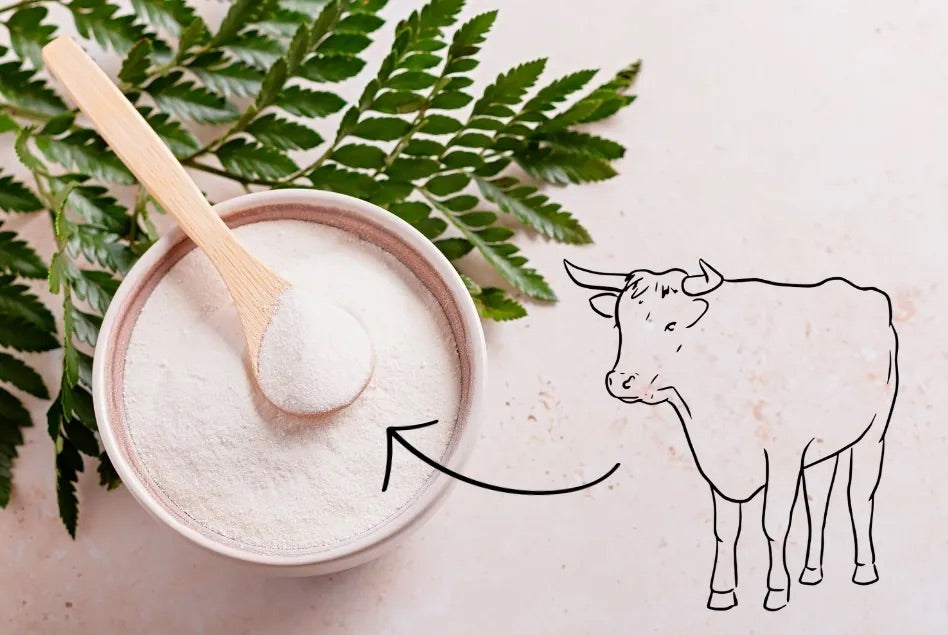
Type 1 collagen is the most abundant form in skin, tendons, and bone. Type 3 is found alongside it in skin and blood vessels. Bovine hide collagen naturally contains both.
For anyone weighing halal-certified bovine collagen benefits, this combination is the practical reason bovine sources are popular: you get the two types most associated with skin and musculoskeletal support in one ingredient.
Collagen Type
Primary Role
Where It's Found
Type 1
Skin structure, tendons, bone
Skin, bone, connective tissue
Type 3
Skin elasticity, blood vessels
Skin, organs, vessels
Bovine hide
Supplies both Type 1 and 3
Cattle hide
How to Choose High-Quality Collagen: A Practical Checklist
Quality in collagen comes down to three things: where the raw material came from, what happened to it during processing, and whether the seller will show you the paperwork. Most checklists stop at "look for grass-fed." Here's what each item actually means.
Sourcing: What "Grass-Fed" Should Tell You
Grass-fed is a farming claim, not a certification, unless a specific certifying body backs it. When a seller says grass-fed, the useful follow-up questions are:
Pasture-raised or grain-finished? Cattle can be grass-fed for part of their lives and grain-finished before slaughter. The two are not the same.
Which country of origin? Supply chains cross borders. A product assembled domestically can still use imported raw material.
Is the source animal named? "Bovine" is specific. "Animal collagen" or "collagen peptides" without a species is a signal the source is blended or undisclosed.
For halal buyers, sourcing and slaughter method are linked. The same cattle that produce a quality hide also determine whether the collagen meets your religious requirements, so the sourcing question does double duty.
Additives: What to Watch For by Name
A pure collagen powder should have one ingredient: hydrolyzed bovine collagen. Anything else on the label is there for the manufacturer's convenience, not yours.
Common additives to scan for:
Flavoring agents, natural or artificial. These limit what you can mix the powder into and often mask lower-quality raw material.
Sweeteners, sugar, dextrose, maltodextrin, or sugar alcohols. Maltodextrin in particular is a common bulking agent that adds carbohydrate without nutritional value.
Anti-caking agents, silicon dioxide, magnesium stearate. These prevent clumping in the bag but aren't necessary in a powder you'll stir into liquid.
Flow agents and carriers, often unlisted on the front of the label but present in the ingredient panel.
If the ingredient list is longer than one line, ask why.
Processing: Hydrolyzed Peptides and What They Mean
Hydrolyzed collagen has been broken into smaller peptide chains through enzymatic hydrolysis. The body absorbs these shorter chains more readily than intact protein. Look for the word "hydrolyzed" or "peptides" on the label, it's the difference between a powder your body can use and one it mostly passes through.
Molecular weight is sometimes listed. Lower molecular weight generally means faster absorption, though the practical difference between products in the same range is small. What matters more is that hydrolysis happened at all.
Transparency: The Documentation Test
A seller worth buying from will provide, on request:
The halal certificate, naming the product and facility
A certificate of analysis (COA) for the batch, showing purity and heavy-metal testing
The country of origin for the raw material
You don't need to read a COA like a chemist. You need to confirm it exists, that it's batch-specific, and that the seller sends it without a fight. That single request filters out most of the guesswork.
The Checklist
Source animal is named (bovine, not "animal collagen")
Cattle are grass-fed and pasture-raised, with country of origin disclosed
Halal certification is from a recognized body, naming product and facility
Formula is unflavored and odorless with no added sugar, fillers, or anti-caking agents
Hydrolyzed peptides listed, which aid absorption
Seller provides halal certificate and batch COA on request
Pro TipAsk for the certificate, not just the label. A seller who can send the actual certification document, naming the product and facility, is the one worth buying from. That single request filters out most of the guesswork.
Unflavoured Collagen Powder Usage: Daily Routine and Recipes
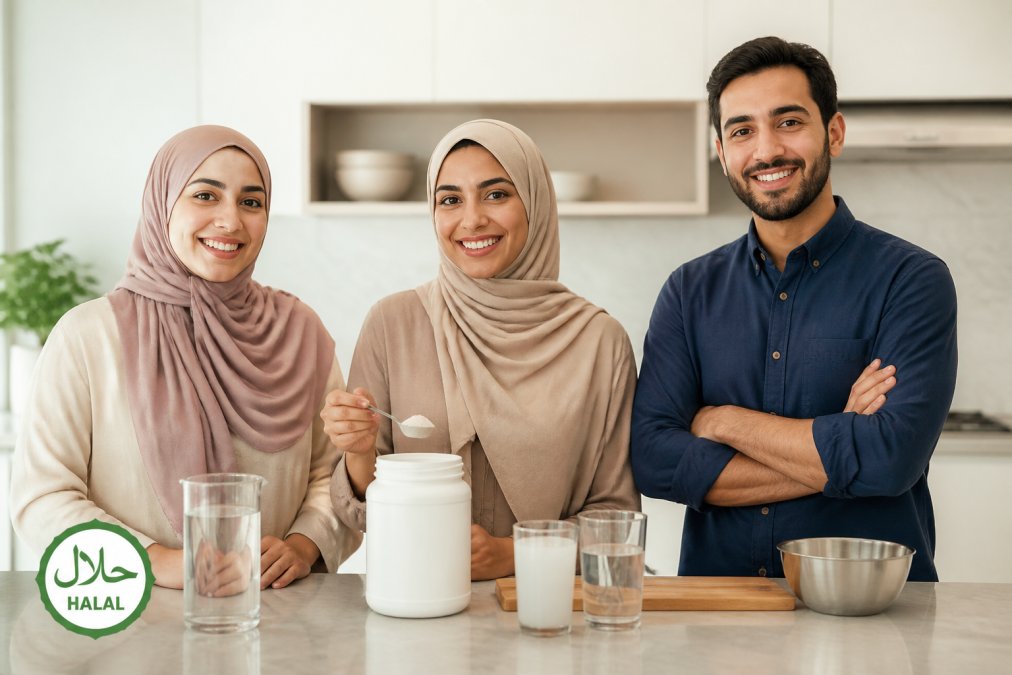
Unflavoured collagen powder dissolves into any hot or cold beverage without changing taste, which makes it easy to add to an existing routine. A common approach is one scoop daily, stirred into coffee, tea, water, or a smoothie.
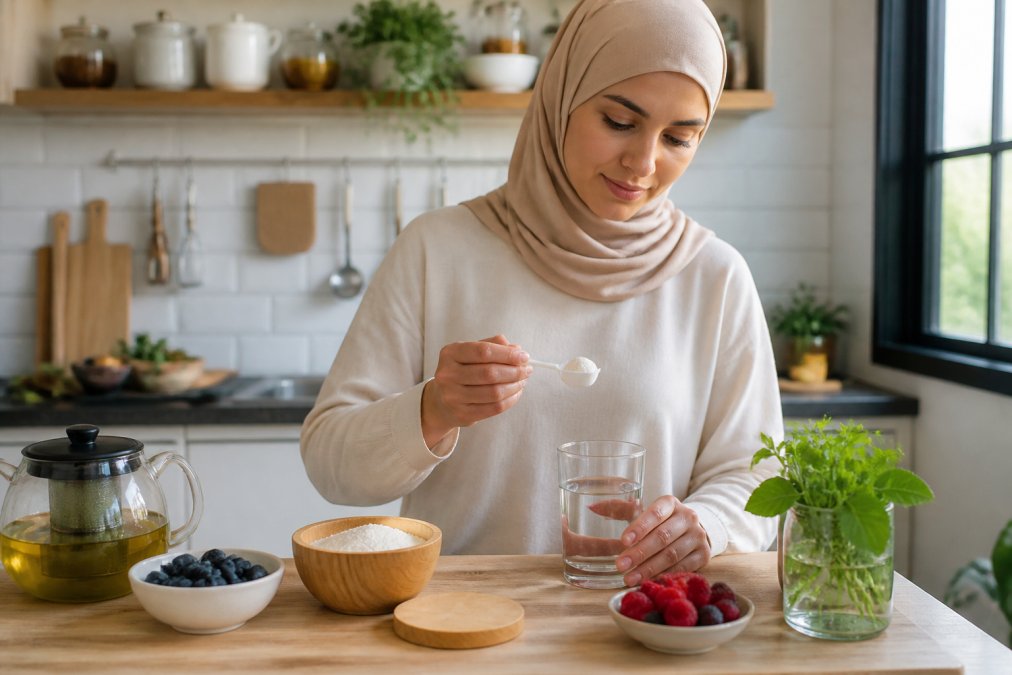
A woman in a bright kitchen adding a scoop of unflavoured collagen powder to a glass of water, with fresh ingredients like berries and green tea visible on the counter
Because it's odorless, it works in savory dishes too: soups, stews, and sauces. That flexibility is the main advantage over flavored powders, which limit what you can add them to.
For a simple routine: add a scoop to your morning coffee, or blend it into a post-workout smoothie. Consistency matters more than timing.
The best collagen routine is the one you'll actually keep. Unflavoured powder removes the taste barrier, so it fits into whatever you already drink daily.
Comparing Halal Collagen Options in Canada
When comparing options, focus on certification, sourcing, format, and value per serving rather than brand marketing. Sustainable Lifestyle offers four sizes of unflavoured, Halal-certified bovine collagen powder, all grass-fed and Canadian-made, with no duties or border fees for Canadian shipping.
The starter pouch suits a first-time buyer testing whether collagen fits their routine. The bundles lower the cost per serving for anyone committing long-term, and the family pack is built for households or bulk buyers.
Best ForHouseholds or anyone building a daily routine who wants the lowest cost per serving and a single ingredient list.
Absorption, Side Effects, and What to Expect
Hydrolyzed collagen is broken into smaller peptides, which the body absorbs more readily than intact protein. Taking it with vitamin C, which supports collagen synthesis, is a common pairing.
Most people tolerate collagen powder well. A minority notice mild digestive upset when starting, usually resolved by splitting the dose or taking it with food.
People with allergies to beef or cattle products should avoid bovine collagen. Anyone managing a medical condition or taking medication should check with a healthcare provider first.
Results take time. Hair and nail changes typically show over weeks to months, not days. Patience and consistency matter more than any single product choice.
Conclusion
Finding halal collagen near me that's genuinely certified, clean-label, and worth the price takes more than reading a label. Sustainable Lifestyle offers unflavoured, odorless Halal-certified bovine collagen from grass-fed cattle, Canadian-made, in four sizes to match your routine and budget. Start with the Starter Pouch and build from there.
Frequently Asked Questions
How can I verify if a collagen supplement is truly Halal-certified?
Look for a certification body recognized in Canada, such as a Halal certification authority, and check that the certification covers the specific product, not just the brand. Request a certificate number and verify it directly with the certifying body. Reputable brands publish their certification details and can provide documentation on request. If a label only says 'Halal' without naming a certifier, treat that claim with caution until you can confirm it independently.
Does Halal collagen differ in quality from standard collagen?
The quality difference comes from sourcing and processing standards, not the Halal label itself. Halal-certified bovine collagen from grass-fed, pasture-raised cattle typically undergoes stricter traceability checks because certification requires documented supply chains. The collagen peptides themselves are the same type 1 and type 3 found in conventional products. What changes is the assurance that no prohibited substances or processing methods were used at any stage.
What are the benefits of choosing Halal-certified bovine collagen?
Halal-certified bovine collagen benefits include supporting skin elasticity, hair follicle health, nail strength, and joint comfort, the same as any quality collagen peptide supplement. The added value is faith compliance: you get these benefits without compromising Islamic dietary requirements. Grass-fed sourcing also means a cleaner nutritional profile with no added hormones or unnecessary additives, which matters if you are looking for a clean-label supplement.
How does unflavoured collagen fit into a daily Halal diet?
Unflavoured collagen powder dissolves in any hot or cold beverage without changing taste or texture, so you can add it to coffee, tea, smoothies, soups, or water. This makes it easy to incorporate into your existing routine without altering meal flavors. A typical daily intake is one to two scoops, providing roughly 10 to 20 grams of collagen peptides. Just confirm the powder itself is Halal-certified and free from additives that might affect your dietary requirements.
The real challenge with halal collagen isn't availability, it's verification. Sustainable Lifestyle makes that part simple: Halal-certified bovine collagen, grass-fed sourcing, an unflavoured and odorless formula that dissolves into any drink, and Canadian-made shipping with no duties or border fees. Get started with Sustainable Lifestyle and build a daily routine you can actually trust.