Cart
0


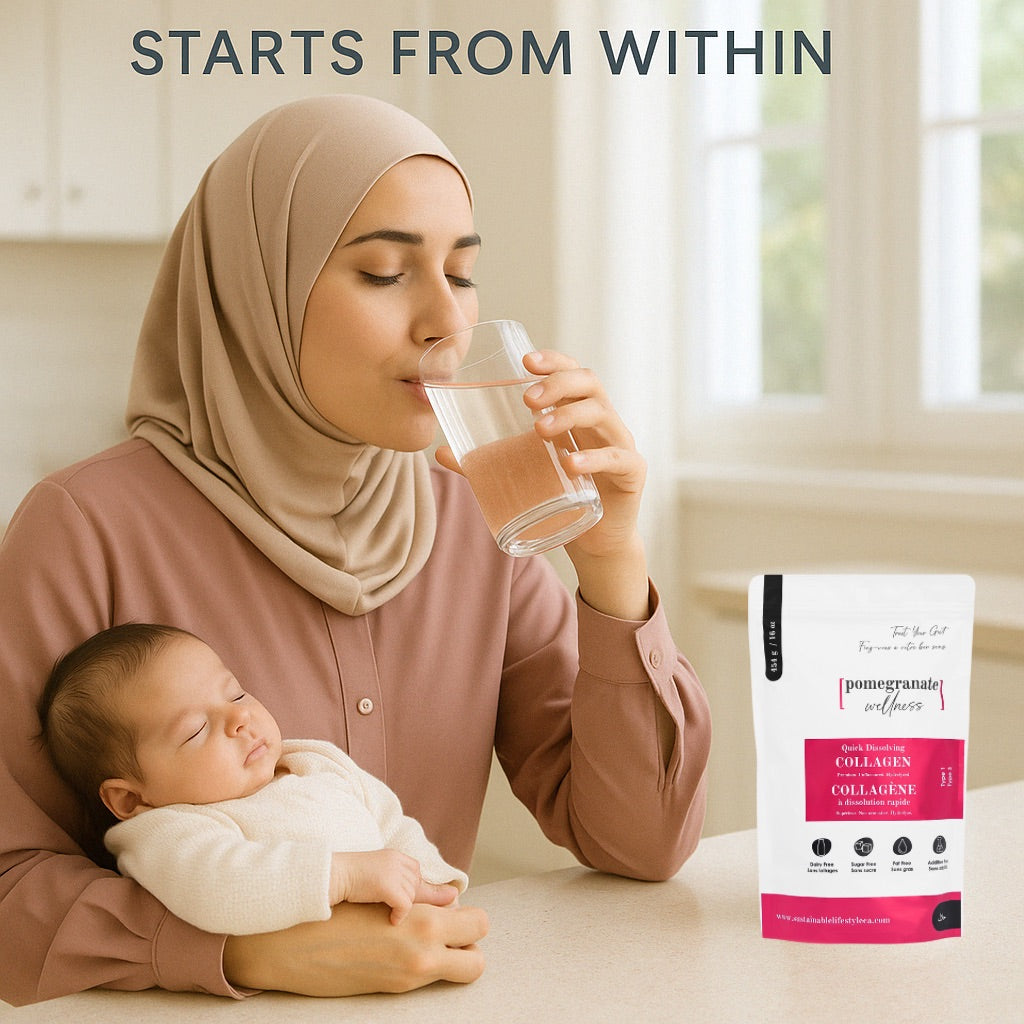
Table of Contents
- What Is Postpartum Hair Loss and Why It Happens
- How Collagen Supports Hair Recovery After Pregnancy
- Postpartum Hair Regrowth Timeline: What to Expect Month by Month
- Collagen Dosage for Hair Growth: How Much to Take Daily
- How to Manage Postpartum Skin Dryness Alongside Hair Loss
- Choosing a Halal-Certified Collagen for Postpartum Recovery
- Frequently Asked Questions
Last Updated: September 18, 2026
What Is Postpartum Hair Loss and Why It Happens
Postpartum hair loss is a temporary shedding condition that occurs when estrogen levels drop after childbirth, pushing many hair follicles into the resting phase at once. This guide explains what triggers it, how long it lasts, and how collagen for postpartum hair loss recovery fits into a realistic plan.
Here is what most new mothers are not told: the shedding is not a sign that anything is wrong. It is a sign that the hair cycle is resetting.
During pregnancy, elevated estrogen keeps hair in the growing phase longer than usual, so density climbs. After delivery, estrogen falls and every follicle held in growth transitions into shedding together, showing up roughly two to four months later as handfuls of hair in the shower drain.
Postpartum hair loss is the excessive shedding of hair that follows childbirth, caused by hormonal fluctuations rather than a nutritional deficiency or a scalp condition. The medical term for this pattern is telogen effluvium, a stress-induced shift in the hair cycle that resolves on its own for most women.
The Telogen Effluvium Timeline
The hair cycle has three phases: growth (anagen), transition, and rest (telogen). Pregnancy extends anagen; delivery forces a mass transition into telogen. Because telogen lasts about three months, shedding typically begins around month three and peaks between months four and six.
The timeline is predictable. If shedding starts at week 12 and peaks at week 20, that is the cycle behaving normally, not collagen failing. Knowing the timeline prevents panic buying.
Key Takeaway
Postpartum shedding follows a fixed biological schedule. Track when it starts rather than how much you lose on any single day, because daily volume varies wildly and tells you almost nothing.
How Collagen Supports Hair Recovery After Pregnancy
Collagen supports hair recovery by supplying the amino acids needed to rebuild each strand. Hair is roughly 95% keratin, and keratin production depends on glycine, proline, and hydroxyproline, the same amino acids that dominate collagen.

The body cannot build hair from nothing. During post-pregnancy recovery, raw material is stretched thin between tissue repair, milk production, and daily turnover.
A common mistake is expecting collagen to stop the shedding. It will not; shedding is hormonal and runs its course. What collagen can do is support the regrowth phase, when the follicle re-enters anagen and needs amino acids, vitamin C, and zinc to build a new strand, stocking the warehouse before the rebuild, not halting the process.
Bioavailability: Why Hydrolyzed Collagen Peptides Matter
Hydrolyzed collagen is collagen broken into short peptide chains, typically 2 to 20 amino acids long, so the digestive system absorbs it more readily than intact collagen protein, whose molecules are too large to pass efficiently through the intestinal wall.
Hydrolyzed collagen peptides are the form used in most skin and hair research. But absorption is not the same as results: a perfectly bioavailable product can deliver nothing noticeable if the diet is short on protein, iron, or zinc.
Watch Out
Do not stack a collagen supplement on top of an already low-protein diet and expect hair regrowth. Collagen supplies specific amino acids, not complete protein. If overall protein intake is low, the body will prioritize vital functions over hair.
Postpartum Hair Regrowth Timeline: What to Expect Month by Month
The postpartum hair regrowth timeline typically runs 12 to 18 months from delivery to full recovery, with visible new growth around month six to nine. Most women see shedding stop before regrowth becomes obvious, which is why the middle months feel like nothing is happening.
Here is the sequence, based on the standard telogen effluvium pattern:
| Phase | Typical Timing | What Is Happening | What You Will Notice |
|---|---|---|---|
| Shedding begins | Months 2-4 | Follicles exit telogen, hair falls | More hair in the shower drain and on the pillow |
| Peak shedding | Months 4-6 | Highest daily loss | Handfuls of hair when washing or brushing |
| Shedding slows | Months 6-9 | New growth starts at the scalp line | Less shedding, but no visible thickness yet |
| Visible regrowth | Months 9-12 | Short "baby hairs" along the part | Fuzzy new strands at the hairline and temples |
| Full density | Months 12-18 | Cycle returns to normal | Hair feels thicker and styles normally |
The short hairs along the hairline signal that recovery is working.
Value Upgrade: Unflavoured Halal →
How Much Shedding Is Normal?
A common pattern is losing 100 to 150 hairs per day during peak shedding, versus the usual 50 to 100. The key distinction is whether the loss is diffuse (spread evenly) or concentrated in patches.
Tracking Progress Without Driving Yourself Crazy
Anyone tracking progress should photograph the same section of scalp under the same lighting on the first of each month. Memory is unreliable, and the mirror lies about gradual change. Avoid counting hairs, daily counts vary with washing, brushing, and touching, so the number tells you almost nothing. The timeline and new growth at the hairline are more reliable signals.
Key Takeaway
Expect shedding to peak between months four and six, then taper. New growth at the hairline around month nine is the first real sign that the cycle is resetting. If shedding is still heavy past month twelve, that is the point to check in with a healthcare provider.
Collagen Dosage for Hair Growth: How Much to Take Daily
The commonly used collagen dosage for hair growth is 2.5 to 15 grams of hydrolyzed collagen peptides daily, taken consistently. Most skin and joint research uses 2.5 to 10 grams, and hair benefits are treated as an extension of those findings rather than a separately established dose.
Practical ways to hit a daily target:
- Stir one scoop into morning coffee or tea, which takes seconds and adds no taste
- Blend into a smoothie with vitamin C-rich fruit to support absorption
- Add to soups, oatmeal, or baking during meal prep
- Split the dose across two drinks if a single serving feels like too much
Pro Tip
New mothers juggling night feeds rarely remember a supplement at the same time each day. Anchor it to something that already happens without fail, like the first cup of coffee after the morning feed, and the habit forms on its own.
How to Manage Postpartum Skin Dryness Alongside Hair Loss
Postpartum skin dryness comes from the same hormonal shift that drives hair shedding, so treating the two as one recovery process makes more sense than buying separate products. Falling estrogen reduces oil production and slows the skin's ability to hold water, leaving skin tight, flaky, or dull in the same months hair falls out.
The fix is boring but effective:
- Increase water intake, especially if breastfeeding
- Use a gentle, fragrance-free cleanser rather than anything exfoliating
- Apply moisturizer within three minutes of washing to trap water in
- Keep showers warm rather than hot
- Support the diet with healthy fats and adequate protein
The Supplement Stack Question: Collagen and Prenatal Vitamins
Most new mothers are still taking a prenatal vitamin when they start thinking about collagen, and the two are usually safe to combine. Prenatal vitamins typically contain iron, folate, calcium, vitamin D, and sometimes biotin or zinc; collagen peptides supply amino acids, not vitamins or minerals, so there is no direct nutrient overlap. The interaction to watch is timing, not toxicity.
A Simple Rule for Combining Supplements
A practical approach: keep the collagen powder plain and unflavored, take the prenatal as directed, and avoid layering additional hair, skin, and nail supplements on top without checking with a healthcare provider first. The goal is to support recovery, not build a shelf of competing bottles.
Watch Out
Do not assume that because a supplement is sold over the counter it is safe to combine freely with a prenatal vitamin. Iron, calcium, and zinc all interact with absorption, and high doses of any single mineral can cause imbalances. Check labels and ask a healthcare provider before stacking.
Choosing a Halal-Certified Collagen for Postpartum Recovery
Choosing a collagen supplement during postpartum recovery comes down to four checks: certification, sourcing, ingredient list, and format. For Muslim mothers, the first is non-negotiable, because a powder that is not Halal-certified may come from non-Halal sources or shared equipment.
Beyond certification, three other factors matter:
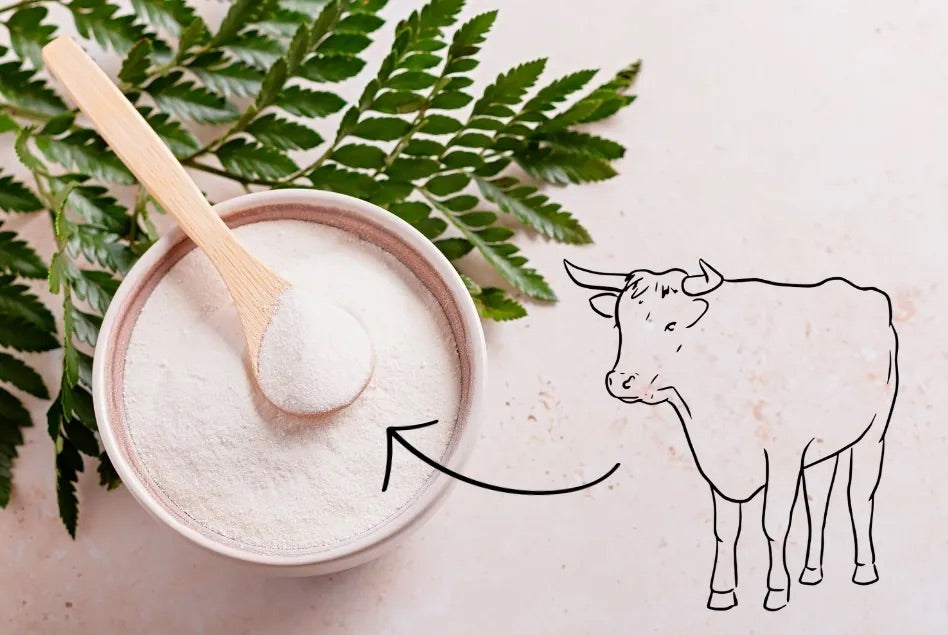
- Sourcing: Grass-fed, pasture-raised bovine is the standard most buyers look for.
- Ingredient list: A clean formula should contain collagen peptides and little else. Added sugar, artificial flavoring, and fillers add nothing.
- Format: Unflavored powder dissolves into any hot or cold drink without altering taste. That matters when the goal is a daily habit rather than a treat.
Frequently Asked Questions
Does collagen help with postpartum hair loss?
Collagen provides amino acids like glycine and proline that support keratin production and hair follicle health. While it cannot stop the natural shedding phase of telogen effluvium, it can support the regrowth phase by supplying structural proteins your body needs. Pairing collagen with adequate iron, zinc, and vitamin C gives your hair the best chance of recovering density after pregnancy.
Is it safe to take bovine collagen while breastfeeding?
Hydrolyzed collagen peptides are generally considered safe during breastfeeding because they are simply protein broken into smaller amino acids. However, always check with your healthcare provider before starting any supplement, especially if you have allergies or dietary restrictions. Choosing a Halal-certified, unflavored collagen with no additives or preservatives keeps your routine simple and clean.
When does postpartum hair loss typically stop?
Shedding usually peaks around three to four months after delivery and begins to slow by six months. Most women notice new growth filling in between six and twelve months postpartum. If shedding continues heavily past twelve months or comes with fatigue or other symptoms, speak to your doctor about checking for nutritional deficiencies such as low iron or thyroid changes.
How long does it take to see results from collagen supplements?
Most people notice skin hydration improvements within four to eight weeks. Hair changes take longer because the hair cycle moves slowly, so expect three to six months of consistent daily use before seeing meaningful regrowth. Taking your collagen at the same time each day, whether in coffee, tea, or a smoothie, helps you stay consistent enough to give it a fair trial.