Chariot
0

Last Updated: November 7, 2026
Quick Summary
To store collagen powder for maximum freshness, keep it in its original resealable pouch, sealed tightly after every use. Store the pouch in a cool, dry, dark cupboard away from heat, sunlight and moisture, and scoop only with a clean, dry spoon.
- Keep the powder in its original resealable pouch and press out air before closing it.
- Choose a cool, dry, dark spot away from the stove, dishwasher and direct sunlight.
- Scoop only with a clean, dry spoon, since water on a spoon starts clumping.
- Refrigeration is generally not needed when the powder stays dry and sealed.
- Discard the powder if you see mould, an off smell, colour change or persistent clumps.
Table of Contents
- Why Storage Matters for Collagen Powder
- Step 1: Keep the Powder Sealed in Its Original Pouch
- Step 2: Choose a Cool, Dry, Dark Spot
- How to Store Collagen Powder After Opening
- Does Collagen Powder Need to Be Refrigerated?
- Collagen Powder Shelf Life After Opening
- How to Tell If Collagen Powder Has Gone Bad
- Choose a Reliable Pouch for Your Next Refill
- Frequently Asked Questions
Collagen powder is one of those supplements that is easy to buy and easy to ruin. A few weeks of careless storage can leave a pouch clumpy, stale, or simply less pleasant to use. The good news is that the fix is simple. Keep the powder dry, keep it cool, keep it sealed, and most of the freshness problems never happen. This guide from Sustainable Lifestyle walks you through each step, from the first day you open a pouch to the moment you decide it is time to replace it.
Freshness matters for two reasons. First, the powder should taste and mix the way it should, so your daily drink stays smooth and neutral. Second, you want the product to be as clean as it was when you bought it. Moisture and heat are the main enemies of any dry powder. Once they get in, the powder can clump, change texture, or start to smell off.
Why Storage Matters for Collagen Powder
Collagen powder is a dry, hydrolyzed protein. Hydrolyzed means the protein has been broken into smaller pieces so it dissolves easily. That same process makes the powder more sensitive to moisture. Even a small amount of humidity can make it cake together in the pouch.

Storage affects three things you will notice:
- Texture: Dry powder mixes smoothly. Damp powder forms lumps that will not dissolve well.
- Smell and taste: The product is unflavoured and odourless when fresh. Stale or spoiled powder can develop an off smell.
- Appearance: Clean, uniform powder is a good sign. Colour changes or visible mould mean the product should be thrown out.
Good storage costs almost nothing. It is mostly a matter of habit, and the habits are easy to build.
Step 1: Keep the Powder Sealed in Its Original Pouch
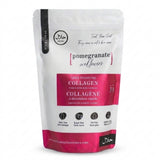
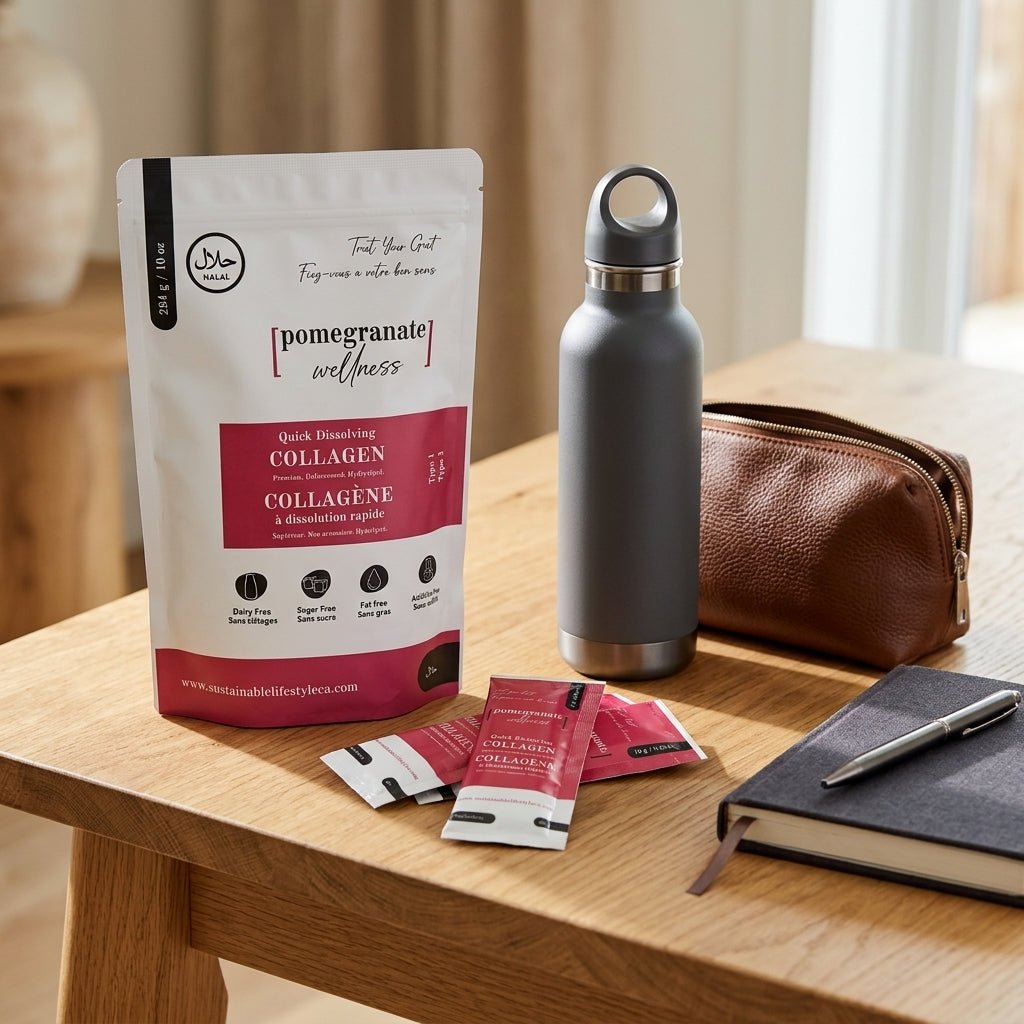
The original pouch is designed to protect the powder. It is the best container you have, so start there. The Halal Bovine Collagen Peptides Powder Starter Pouch comes in a resealable pouch, which makes it easy to keep the contents sealed between uses.

After each scoop, press out as much air as you can and close the seal tightly. Air carries moisture, and every time the pouch is left open, humidity gets in. A pouch that is sealed right after each use will stay dry much longer than one left open on the counter.
A few simple habits help:
- Close the seal before you put the pouch back on the shelf.
- Wipe the top edge of the pouch if powder has gotten on it, so the seal closes properly.
- Use a clean, dry tablespoon every time. Water on a spoon can start clumping in the pouch.
If you are weighing whether to keep the powder in its original pouch or move it, the answer is almost always to keep it in the pouch. The packaging is made for this job.
Step 2: Choose a Cool, Dry, Dark Spot
Where you store the powder matters as much as how you seal it. The best spot is a cool, dry, dark place, but those words are only useful if you know what they mean in practice. A stable, moderate room temperature and low humidity are what matter most for a dry powder like this.
A pantry shelf or a cupboard away from the stove, dishwasher, and oven works well. Avoid spots near heat sources, windows that get direct sun, and damp areas like under the sink.
Some practical guidelines:
- Keep it away from heat. Warm conditions speed up spoilage and can soften the powder. Do not store it on top of the fridge, beside the stove, or in a car, where summer interior temperatures can climb very high.
- Keep it out of direct sunlight. Light can weaken the product over time, so a dark cupboard is better than an open shelf in a sunny kitchen. If your only option is a shelf that catches afternoon sun, move the pouch into an opaque container or a closed cabinet.
- Avoid humid areas. Bathrooms, basements, and the space directly above a kettle or dishwasher often run high humidity. Choose a dry shelf instead.
- Store it at room temperature. A stable room temperature is ideal. Big temperature swings can cause condensation inside the pouch, especially if the pouch moves between a cold garage and a warm kitchen.
- Watch the seasonal shift. In humid summer months, a cupboard that was fine in winter can creep above 60% relative humidity. Check your hygrometer when the weather changes and move the pouch if needed.
A cupboard in the main living area of the home is usually the easiest choice. It stays stable and dry for most of the year.
Watch out: a spot that feels cool to the touch but sits next to a running appliance, such as the side of the fridge or above a microwave, can be warmer and more humid than the room average, so measure rather than assume.
How to Store Collagen Powder After Opening
Once you open a pouch, the clock starts. For ideas on mixing it into drinks, see how to take our Premium Halal Bovine Collagen. Opened powder is more exposed to air, so the steps you take matter more now.
Here is a simple routine for opened powder:
- Scoop with a clean, dry spoon only. A wet spoon is the most common way moisture gets into a pouch.
- Reseal the pouch right after you finish scooping, pressing out excess air as you close it.
- Store the pouch in the cool, dry, dark spot you measured in the previous step.
- Check the powder for clumps or odour before each use.
- Write the open date on the pouch with a marker so you are not guessing later.
If you use the powder every day, a 10oz (284g) pouch may be empty in about 28 days, depending on your serving size.
When to keep the original packaging and when to transfer
The original pouch is designed to protect the powder, and it carries the product label, batch information, and the printed date. For most people, keeping the powder in its original resealable pouch is the safest choice.
If you do transfer the powder, choose a clean, dry, airtight container with a tight-fitting lid, such as a glass jar with a rubber gasket or a food-grade plastic container.
Handling moisture and contamination
- Never scoop over a steaming mug or pot. Steam rises into the pouch and condenses on the powder.
- Keep the pouch closed while you prepare your drink, and open it only for the few seconds it takes to scoop.
- Do not return a damp scoop to the pouch or put a wet spoon back in after stirring.
- If powder clumps on the inside of the seal, wipe the edge with a dry paper towel so the seal closes properly.
- Keep the pouch away from the sink, kettle, and dishwasher door, where splashes and steam are common.
Once opened, the powder is more exposed to air, so the steps you take matter more. Here is a quick routine to follow.
| Habit | Why it matters | How often |
|---|---|---|
| Scoop with a clean, dry spoon | Water on a spoon starts clumping | Every use |
| Reseal the pouch right away | Air carries moisture into the powder | Every use |
| Store in a cool, dry, dark spot | Heat and humidity speed spoilage | Always |
| Check for clumps or odour | Catches spoilage early | Before each use |
| Write the open date on the pouch | Avoids guessing how old it is | Once, at opening |
Does Collagen Powder Need to Be Refrigerated?
Refrigeration is generally not needed for this powder when it is kept dry and sealed. Taking a cold pouch out into warm air can cause condensation, which is the moisture you want to avoid.
If you are unsure, check the product label for storage instructions, since the manufacturer's guidance always comes first.
Keep the powder dry and out of the fridge door, where temperature changes are most frequent.
Collagen Powder Shelf Life After Opening
Check the date printed on the label for how long the pouch keeps. Many people finish a pouch within a month or two, which is usually well within a safe window when it is stored correctly.
Do not rely on a guessed number of days. Instead, check the label for the printed date and use your senses. The powder should look uniform, smell neutral, and mix smoothly. If any of those change, it is time to stop using it, even if the date has not passed.
A few tips help extend freshness:
- Buy a size you can finish within a reasonable time.
- Keep unopened backup pouches in a cool, dry cupboard.
- Write the open date on the pouch with a marker.
How to Tell If Collagen Powder Has Gone Bad
Spoiled collagen powder is not always obvious, so it helps to know the warning signs. To compare what a quality supplement should look like, read signs of high quality collagen supplements. Trust your senses, and when in doubt, throw it out. Your health comes first.
Look and smell for these signs:
- Clumping or hard lumps that do not break up when you press them. This often means moisture got in.
- Visible mould, which can appear as fuzzy spots in any colour.
- Off or sour smell. Fresh powder should be odourless.
- Colour change, such as yellowing or dark patches, where the powder used to be uniform.
- Strange taste when mixed into a drink.
If you see any of these, do not use the powder. Discard it and start with a fresh, sealed pouch. Check the seal on the new pouch right away so the same problem does not happen again.
Choose a Reliable Pouch for Your Next Refill
When it is time to restock, choose a pouch that makes storage easy. If you are comparing options, see our guide to the best Halal collagen powder in Canada.
If you use the powder daily and want to avoid frequent reorders, a larger size can make sense.
Frequently Asked Questions
How should I store collagen powder? Keep it in its original resealable pouch, sealed tightly after each use. Store it in a cool, dry, dark cupboard away from heat, sunlight, and moisture.
Does collagen powder need to be refrigerated? Usually not. Unflavoured collagen powder is shelf-stable. Refrigeration can introduce condensation each time the pouch is opened, which encourages clumping.
How long does collagen powder last after opening? It depends on storage and the printed date on the label. Keep it sealed, dry, and cool, and check for clumps, odour, or mould before each use.
What should I do if my collagen powder clumps? Clumping usually means moisture got in.
Sustainable Lifestyle is a Canadian brand offering Halal-certified bovine collagen supplements. Products are sold online for delivery across Canada.
Frequently Asked Questions
How should you store collagen powder after opening?
After each use, press out excess air, fold or clip the original pouch shut, or transfer the powder to a clean, dry, airtight container. Use a dry tablespoon every time so no moisture enters the powder. Keep the container in a cool, dark pantry away from the stove, dishwasher and sunlit windows. Avoid leaving the lid open while you measure, and never return unused powder from a wet spoon. These habits keep the powder dry and protected from heat, light and air.
Does collagen powder need to be refrigerated?
Refrigeration is generally not needed when the powder is kept sealed, dry and cool. Check the product label first, since the manufacturer's instructions take priority. If you do refrigerate, use a fully airtight container and let it reach room temperature before opening to prevent condensation inside the pouch.
How long does collagen powder stay fresh after opening?
Use the best-before date on the label as your guide and follow any post-opening instructions printed on the packaging. Once the powder shows changes in smell, colour or texture, use it no longer.
Can heat or humidity affect collagen powder?
Store the powder in a dry cupboard at room temperature and keep the pouch sealed between uses.